







Choosing a POS system in Malaysia can be confusing because many vendors offer similar claims, from fast checkout to inventory tracking. The real challenge is finding a system that still fits when outlets grow and daily operations need more than basic payment tools.
POS systems now also connect with sales records, customer requests, and tax documentation. According to Malaysia’s e-Invoice Specific Guideline, retailers’ POS systems can integrate with MyInvois for real-time e-Invoices, making clean transaction data more important.
This guide compares 16 POS systems in Malaysia based on practical pos-system selection factors, including business fit, features, pricing, local usability, e-Invoice readiness, and suitability for shops, cafés, restaurants, retail stores, or multi-branch businesses.
Key Takeaways
A Point of Sale (POS) system is a modern tool designed to facilitate sales transactions and manage various aspects of business operations.
Cloud POS prioritizes scalability and real-time access, while Unified POS connects all sales channels into one system.
The Benefit of POS is speed up transactions, track inventory in real time, and automate reporting, improving operational efficiency and data accuracy.
Shortlisted POS System
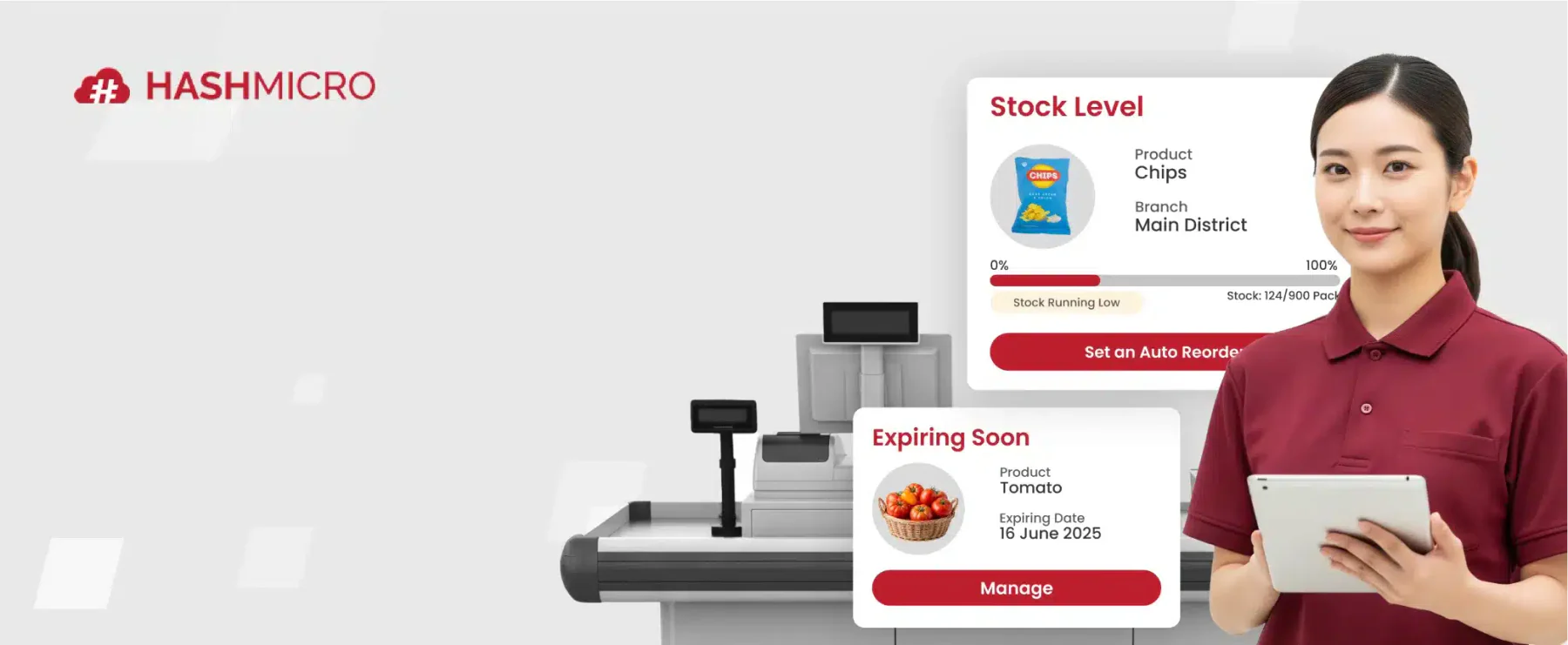
This shortlist covers POS systems with different operational focuses across retail, F&B, e-commerce, and hospitality. HashMicro is listed for connected POS, inventory, accounting, purchasing, and branch reporting needs, while ConnectPOS, Loyverse POS, Sapaad, and Shopify POS represent different use cases such as online store integration, basic sales tracking, restaurant operations, and omnichannel selling.



Best Because
Real-time inventory sync, e-commerce integration, customizable receipts.

Best Because
Cross-platform POS with sales tracking and CRM tools.


Best Because
Unified with Shopify e-commerce, mobile checkout, sales analytics.
After reviewing the top 6 POS software options above, you may want a clearer comparison of how each system differs. With many choices available, it can be difficult to identify which one truly fits your business needs. The table below provides a quick overview to help you decide more easily.
Quick Overview POS System
| Software | Best For | Strength | Malaysia Support | Pricing |
|---|---|---|---|---|
| HashMicro POS System | Retail, F&B, Multi-outlet, Enterprise | ERP-integrated POS with centralized multi-outlet management | Supports MyInvois and LHDN e-Invoicing compliance | Custom pricing |
| ConnectPOS | Retail, Omnichannel | Real-time omnichannel synchronization | Supports multi-currency and payment gateway integrations | RM165–RM420/device/month (RM1,980–RM5,040/year) |
| Shopify POS | Retail, Omnichannel | Strong eCommerce and POS ecosystem | Supports payment gateways and multi-currency selling | RM22–RM395/location/month (RM264–RM4,740/year) |
| Marvelsoft Solutions | Customization, Local Businesses | Highly customizable local POS solution | Supports local tax and invoicing workflows | Custom pricing (Quote-based, est. RM1,500–RM3,500 setup) |
| AutoCount POS System | Retail, Accounting-focused, Enterprise | Strong accounting and financial integration | Supports SST and Malaysian accounting workflows | Custom pricing (Quote-based, est. RM2,000–RM2,800 lifetime license) |
| Dinesoft | F&B, Restaurant | Restaurant-focused workflow and table management | Supports local restaurant payment workflows | Custom pricing (Quote-based, est. RM150–RM350/outlet/month) |
| Red Zone Solution | Customization, Local Businesses | Industry-specific POS customization | Supports localized business requirements | Custom pricing (Quote-based, est. RM2,599+ one-time license) |
| Eat365 | F&B, Restaurant | Delivery and kitchen workflow integration | Supports QR ordering and local delivery integrations | Custom pricing (Quote-based, est. RM200–RM450/outlet/month) |
| StoreHub | Retail, SME | Built-in CRM and loyalty tools | Supports Malaysian payment providers and e-wallets | RM122–RM471/outlet/month (RM1,464–RM5,652/year) |
| Loyverse POS System | Retail, SME, Budget | Free POS with optional add-ons | Supports payment integrations and multi-store operations | RM0–RM110/store/month (RM0–RM1,320/year) |
| POSERVA | Retail, Multi-outlet | Multi-location operational visibility | Supports centralized retail operations | Custom pricing (Quote-based, est. RM100–RM300/month) |
| IRS Software | Accounting-focused, Enterprise | Strong accounting and compliance features | Supports local accounting requirements | Custom pricing (Quote-based, est. RM1,800–RM3,200 lifetime license) |
| Slurp | F&B, Restaurant | QR ordering and cloud-based operations | Supports QR ordering and digital payments | Custom pricing (Quote-based, est. RM120–RM280/outlet/month) |
| Sapaad | F&B, Multi-outlet | Multi-branch restaurant management | Supports multi-currency and cloud deployment | RM250–RM500/outlet/month (RM3,000–RM6,000/year) |
| Genius POS System | Customization, Local Businesses | Flexible modules for different industries | Supports localized POS configurations | Custom pricing (Quote-based, est. RM1,500–RM3,000 setup) |
| EasyStore | Retail, Omnichannel, SME | Unified eCommerce and POS platform | Supports local payment gateways and marketplaces | RM59–RM299/store/month (RM708–RM3,588/year) |
What is a POS system, and what does it actually do?
A Point of Sale (POS) system is a tool designed to handle sales transactions and support business operations. It enables efficient payment processing and is essential for smooth operations in retail, F&B, and hospitality industries.
A modern POS does more than just process payments:
- Tracks your stock: When you sell something, the system updates your inventory. You can see what’s running low before you run out.
- Shows your sales data: Daily sales, best-selling items, slow movers, peak hours. This helps you make better decisions about what to stock and when to schedule staff.
- Manages customers: Some systems track who buys what, store contact details, and run loyalty programs so customers come back.
- Connects to other tools: Good POS systems link to your accounting software, e-commerce store, or food delivery apps so you don’t enter the same data twice.
- Works across outlets: If you have more than one shop, you can see all locations from one dashboard.
Cloud POS vs Unified POS: What’s the Difference?
While both systems aim to streamline sales operations, each offers a different level of integration and functionality within a business. Here is a difference between cloud POS and unified POS.
| Feature | Cloud-Based POS | Unified POS |
|---|---|---|
| How It Works | Operates online and stores data securely in the cloud; syncs across devices in real time. | Integrates sales from physical stores, e-commerce, and mobile channels into one system. |
| Best For | Businesses needing scalability and real-time access. | Businesses managing multiple sales channels. |
| Key Strength | Automatic updates, easy access, low upfront cost. | Full visibility, loyalty tools, and a streamlined customer journey. |
What Are the Benefits of POS Systems?
POS systems speed up transactions, track inventory in real time, and automate reporting, improving operational efficiency and data accuracy.
- Optimal Stock Levels and Reduced Wastage: Real-time inventory tracking ensures businesses maintain the right stock levels, reducing waste and preventing stockouts.
- Improved Customer Experience: Faster checkouts, personalized services, and loyalty programs enhance customer satisfaction, leading to stronger relationships and repeat visits.
- Secure Transactions: POS systems offer secure payment processing, protecting sensitive customer information and ensuring compliance with security standards.
- Enhanced Employee Management: Employee management features help businesses track work hours, sales performance, and optimize staff schedules.
Overall, POS system Malaysia helps streamline operations, improve accuracy, and enhance customer experiences, giving businesses a competitive edge.
Top 16 POS Systems in Malaysia
With many feature-rich options in Malaysia, choosing the right POS system software malaysia can be challenging. To help, we’ve compiled the top 16 POS systems Malaysia for 2026.
1. HashMicro POS System
HashMicro offers a POS System for operations in Malaysia that connects sales, inventory, and reporting in one flow. By syncing transactions with stock movement and basic financial records, it helps teams cut manual updates and keep daily replenishment more controlled, especially when operations get busy.
Key capabilities include inventory-linked stock alerts and reorder points, receipt and end-of-day report templates, product variants and bundles, multiple payment methods including e-wallet support, cashier and salesperson activity tracking, loyalty points, and audit-style reporting for price changes.
Why HashMicro POS System: Businesses choose it for its full ERP integration, real-time inventory tracking, multi-branch management, and user-friendly interface that supports both online and offline operations.
Retail, food and beverage (F&B), and multi-branch businesses that require smooth integration between sales, inventory, and accounting.
| Pros | Cons |
|---|---|
|
|
With these strong features, the HashMicro POS System empowers businesses to optimize their operations, enhance customer satisfaction, and drive growth. Click the banner below to view the pricing scheme.
"A modern POS system helps retailers simplify daily operations and improve margins through automation and real-time insights. It supports faster decisions as sales volume grows, especially when businesses need consistent stock and performance visibility across outlets."
2. ConnectPOS
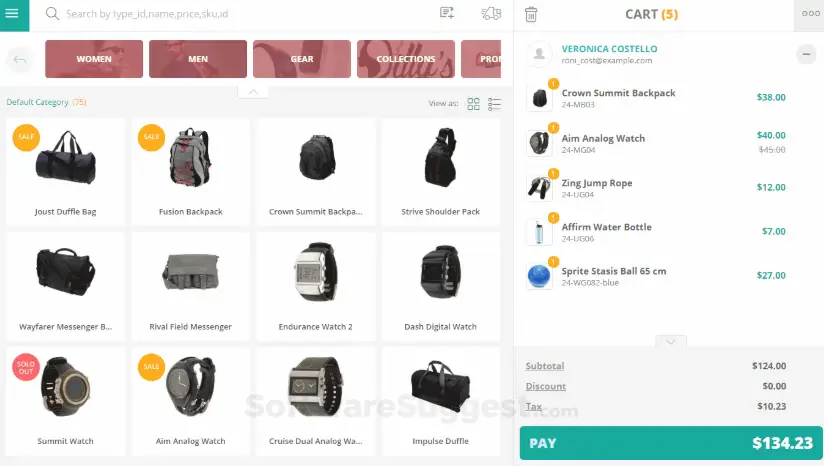
ConnectPOS is a POS system software for restaurant designed to cater to businesses of all sizes.This system integrates perfectly with various e-commerce platforms, allowing businesses to manage their online and offline sales channels from a single system. This software offers features such as real-time synchronization of inventory, customizable receipts, and detailed sales reports.
Best for: Ideal for retail businesses that operate both online and offline, especially those needing multi-location stock management, real-time sync between e-commerce platforms and physical stores, and flexible checkout options.
Pricing: Starts from around RM160 per month (from $39/month)
Businesses choose ConnectPOS because it offers a cloud-native, API-open architecture that supports omnichannel operations, including multiple devices, currencies, and warehouses, while enabling smooth integration with major e-commerce systems.
| Pros | Cons |
|---|---|
|
|
3. Shopify
 Shopify POS is a solid retail POS software integrated with the Shopify e-commerce platform. It allows businesses to manage their online and offline sales from a unified system. Key features include inventory management, customer profiles, mobile checkout, and comprehensive sales analytics.
Why Shopify POS: Businesses choose Shopify POS because it offers a perfect integration between online and in-store operations.
Pricing: Starts from roughly RM120 to RM1,230 per month, depending on plan (from $29–$299/month)
Retailers who operate both e-commerce and brick-and-mortar stores and want one unified platform to manage sales, inventory, customer profiles, and fulfilment across all channels.
| Pros | Cons |
|---|---|
|
|
4. Marvelsoft Solutions
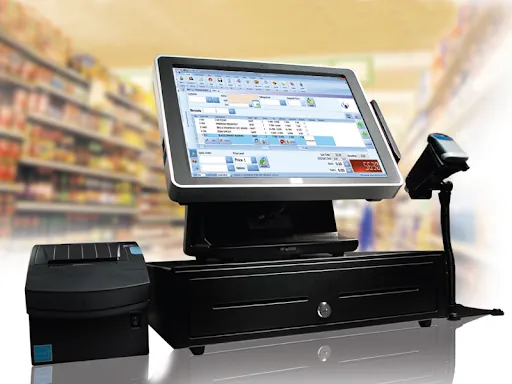
Marvelsoft Solutions provides a Malaysian POS system software tailored for various industries, including retail, hospitality, and F&B. The system is known for its reliable inventory management, sales tracking, and reporting features. It also supports multiple payment methods and integrates with other business management software
Why Marvelsoft Solutions: Businesses choose Marvelsoft Solutions because it combines a strong in-house development and support team with regional service centers, and flawless connectivity between POS, AutoCount accounting, and CRM modules.
Pricing:Custom quote (roughly RM 1,500 – RM 3,500 setup fee), depending on software customization levels, workflow tweaks, and selected hardware bundles.
Retail and F&B businesses in Malaysia and the region that require a fully integrated POS system tied into accounting, CRM, and touch-screen hardware.
| Pros | Cons |
|---|---|
|
|
5. AutoCount
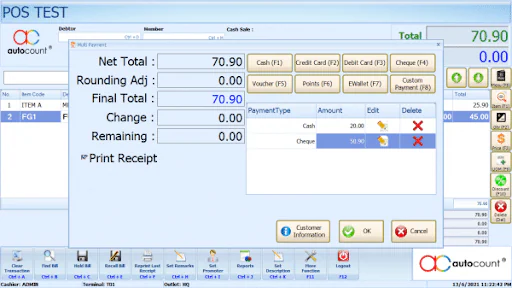
AutoCount POS System is a highly reliable POS solution that is widely used in Malaysia. It offers comprehensive features, including inventory management, customer loyalty programs, and detailed financial reports. AutoCount POS software is known for its integration with accounting software, making it a preferred choice for businesses that require precise financial management.
Why AutoCount POS: Users choose AutoCount POS because it offers offline-capable transactions with real-time sync, compliance with Malaysian tax and electronic invoicing requirements., reliable inventory and stock-control features, and tight integration with AutoCount’s accounting modules.
Pricing:Custom quote (roughly RM 2,000 – RM 2,800 lifetime license), depending on terminal count, accounting module sync, and LHDN e-Invoicing readiness.
Retail and F&B businesses in Malaysia, particularly those with multiple outlets or branches, seeking comprehensive integration between cashier operations, inventory, and accounting.
| Pros | Cons |
|---|---|
|
|
6. Dinesoft
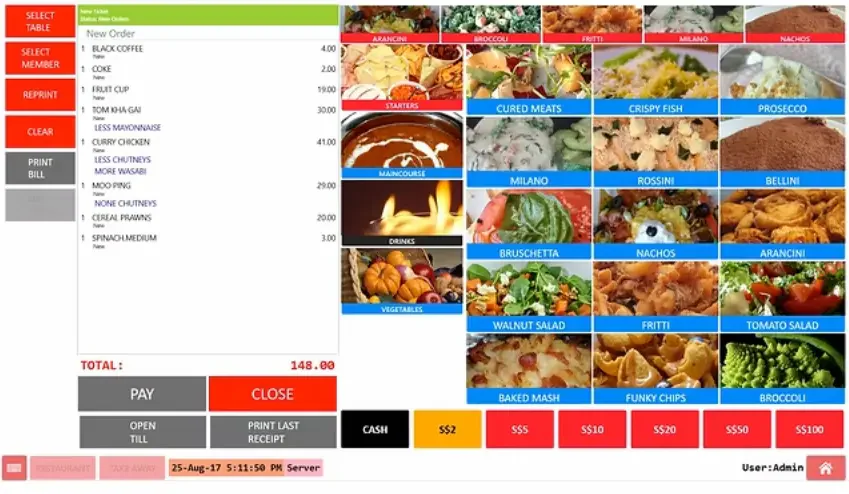
Dinesoft provides a structured counter management platform focused on accelerating transaction processing, order tracking, and payment collection. This POS software strenghts lies in it aims to streamline restaurant operations, improve order accuracy, and enhance customer service.
Why Dinesoft: Businesses choose Dinesoft because it offers a comprehensive suite of modules built for food & beverage and retail workflows, including tablet ordering, self-ordering, and cloud-based back-office reporting.
Pricing: Custom quote (roughly RM 150 – RM 350/outlet/month), depending on F&B features like Kitchen Display Systems (KDS), floor plan mapping, and payment integrations.
Restaurants, cafés, fast-food outlets, and multichannel retail operations that require advanced table management, kitchen display integration, and real-time inventory control.
| Pros | Cons |
|---|---|
|
|
7. Red Zone
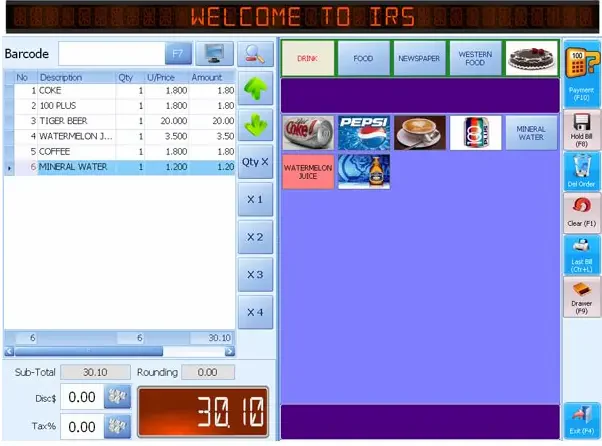
Red Zone Solution is a Point of Sales system in Malaysia designed for various industries, including retail and hospitality. It provides inventory management, sales tracking, and customer relationship management features. Red Zone Solution POS software also offers strong technical support and training for businesses to maximize the system’s potential.
Why Red Zone Solution: Businesses choose Red Zone Solution because it couples POS software with compatible hardware and local support.
Pricing: Custom quote (roughly RM 2,599+ one-time license), depending on hardware terminal choices, barcode/printer peripherals, and on-site setup requirements.
Retail businesses in Malaysia and the region that require a one-stop provider for POS software, as well as barcode and hardware solutions (including printers, scanners, and displays).
| Pros | Cons |
|---|---|
|
|
8. Eat365
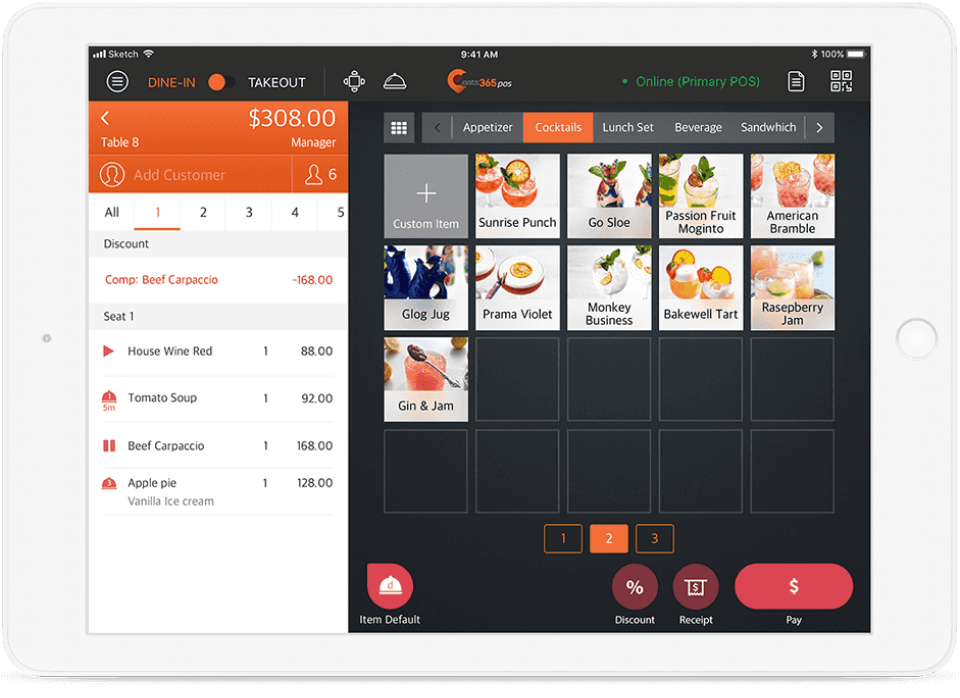 Eat365 is a cloud-native POS platform engineered to consolidate multiple transaction streams and payment channels into a central console. It simplifies order routing and gives management real-time visibility over daily revenue metrics.
cloud-native POS platform engineered to consolidate multiple transaction streams and payment channels into a central console. It simplifies order routing and gives management real-time visibility over daily revenue metrics.
The system offers flexible API connectivity, digital order tracking, and multi-terminal synchronization to support expanding business footprints.
Why Eat365: It offers a unified, cloud-based platform that connects front-of-house, back-of-house, and online operations, supports diverse dining formats and devices, and gives real-time analytics and integrations.
Pricing: Custom quote (roughly RM 200 – RM 450/outlet/month), depending on food delivery platform sync (e.g., GrabFood), self-service kiosks, and active register counts.
F&B businesses that require an end-to-end solution covering POS, kitchen workflows, online ordering, and multi-location management.
| Pros | Cons |
|---|---|
|
|
9. StoreHub
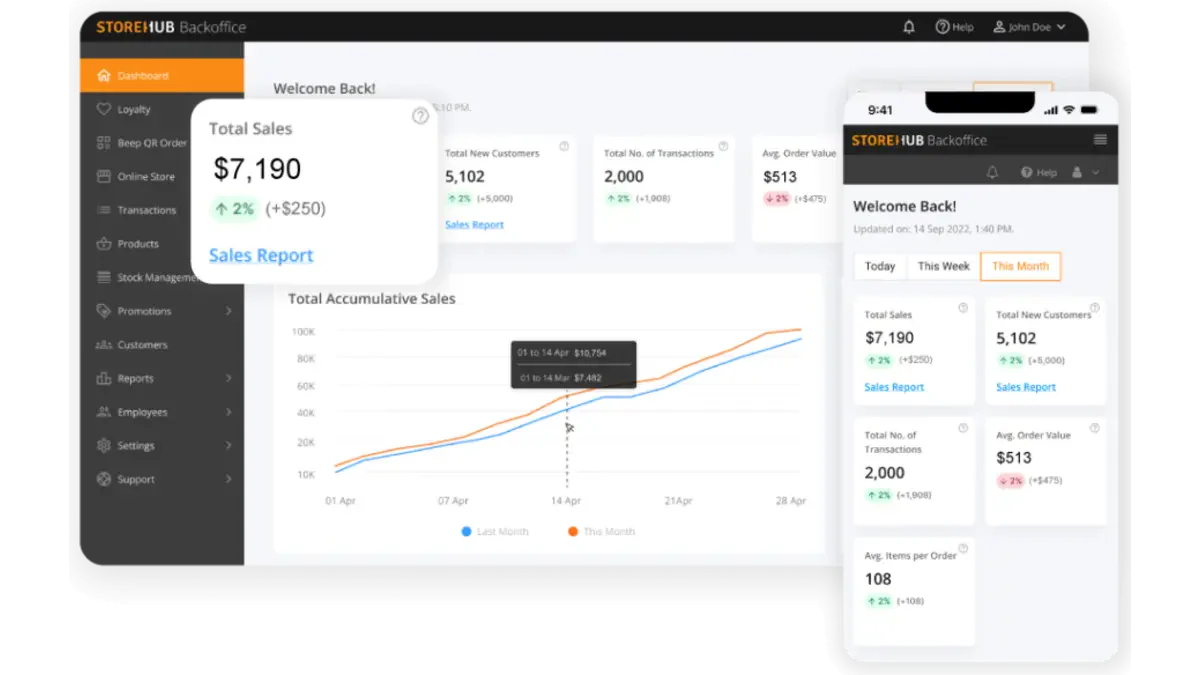 StoreHub is one of the best POS systems, it combines counter checkouts, inventory tracking, and customer loyalty tools within an intuitive interface. It helps operators analyze daily sales trends and monitor stock movements in real time.
It offers features such as inventory management, sales analytics, customer loyalty programs, and employee management and fully integrated with local Malaysian payment providers, e-wallets, and LHDN e-Invoicing workflows, StoreHub serves as an all-in-one operational hub for local SMEs.
Why StoreHub: It combines real-time inventory tracking, multi-outlet management, integrated loyalty and e-commerce features, and a user-friendly interface that can be used without heavy IT support.
Pricing: Starts from RM102 per month.
F&B and retail businesses in Southeast Asia that need a unified cloud-based POS system to manage in-store sales, inventory across multiple locations, and online/offline channels.
| Pros | Cons |
|---|---|
|
|
10. Loyverse
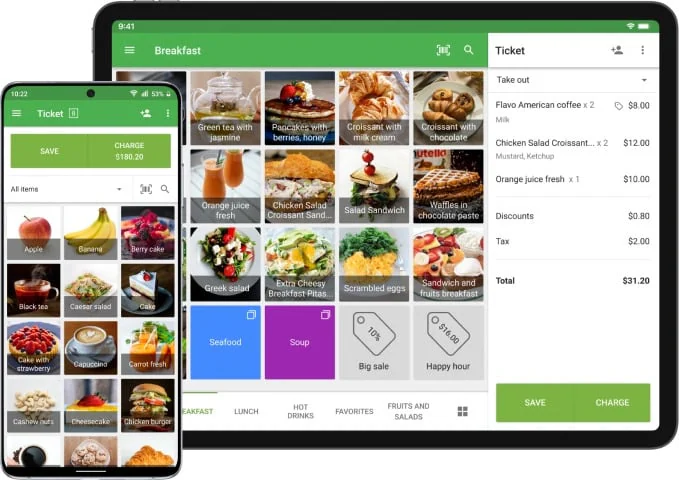
Loyverse POS system is designed to meet the needs of businesses across various industries, including retail, food and beverage, and services. The core functionalities of Loyverse point of sales Malaysia include sales tracking, inventory management, and customer relationship management (CRM).
Why Loyverse: It offers an intuitive interface, works offline when internet connectivity is unreliable, supports multiple devices and locations under one account, and includes built-in loyalty and inventory management.
Pricing: Starts from around RM21 per month (from $5/month).
Retail stores, cafés, takeaways, and other small to medium multi-location operations that need a mobile-friendly POS with core features like sales, inventory, and customer loyalty in one system.
| Pros | Cons |
|---|---|
|
|
11. POSERVA
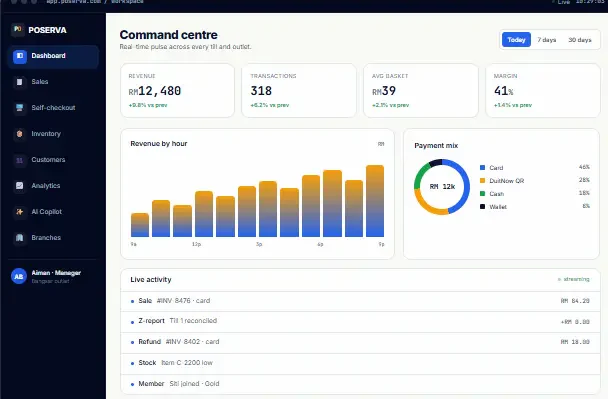
POSERVA offers a solid POS machine in Malaysia designed for retail. It includes features such as sales tracking, inventory management, customer loyalty programs, and detailed reporting. POSERVA POS system for retail emphasizes ease of use and scalability, making it suitable for businesses of various sizes.
Why POSERVA: It offers AI/IoT-enhanced features like predictive analytics and smart integrations, works offline when needed, and is designed to scale across outlets.
Pricing: Custom quote (roughly RM 100 – RM 300/month), depending on multi-store inventory visibility, user permission levels, and cloud storage volume.
Restaurants, cafés, food trucks, and service-oriented businesses that require a modern POS solution with cloud-based reporting and device flexibility.
| Pros | Cons |
|---|---|
|
|
12. IRS Software
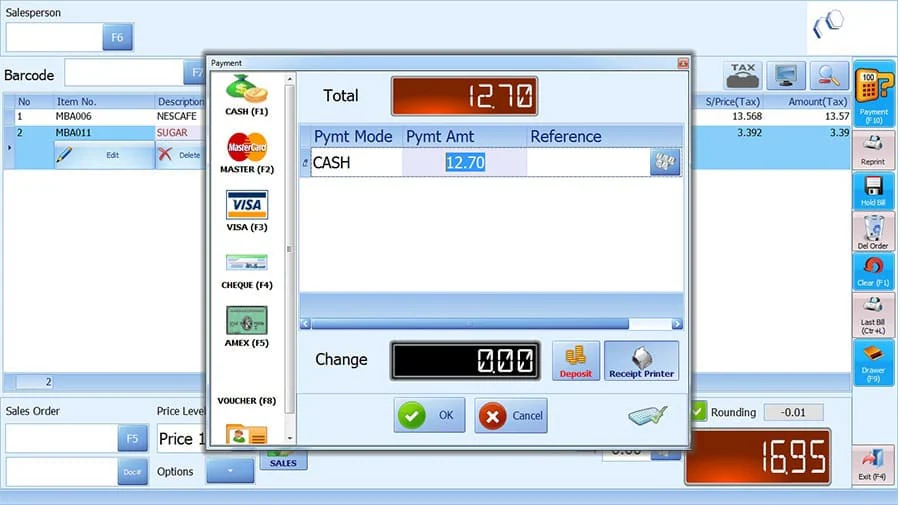
IRS Software is a Malaysian POS system suitable for a range of industries, including retail and F&B. It offers good inventory management, sales tracking, and customer relationship management features. IRS POS Software is known for its reliability and comprehensive support services, making it a trusted choice for many businesses.
Why IRS Software: It offers a long-established presence, strong local support and dealer network, easy-to-use interface, and modules including real-time stock alerts, multi-store synchronization, and e-invoicing compliance.
Pricing: Custom quote (roughly RM 1,800 – RM 3,200 lifetime license), depending on accounting engine integration, Malaysian tax compliance setup, and multi-counter LAN networking.
Malaysian retail and F&B businesses seeking a fully-featured POS system with inventory, membership, and multi-store consolidation capabilities.
| Pros | Cons |
|---|---|
|
|
13. Slurp
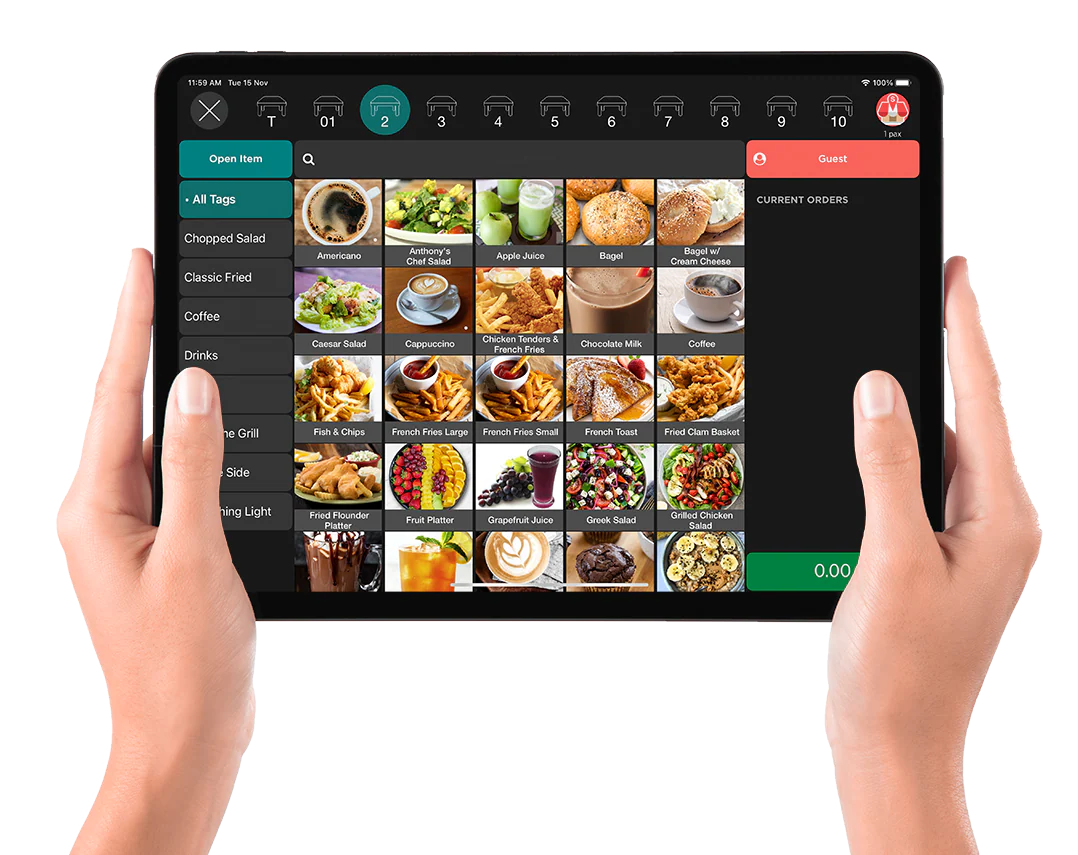
Slurp is a mobile POS system designed for the food and beverage industry. It offers features such as table management, order tracking, and kitchen display integration. Slurp POS software aims to streamline restaurant operations, improve order accuracy, and enhance the customer dining experience.
Why Slurp!: It offers a cloud-enabled, user-friendly platform tailored for F&B operations, supports offline transactions when needed, handles multi-outlet management with real-time monitoring, and integrates effortlessly with ordering, kitchen display, and payment modules.
Pricing: Custom quote (Est. RM 120 – RM 280/outlet/month), depending on the number of iPad terminals, QR table ordering features, and payment gateway connections.
Cafés, restaurants, food-courts, kiosks, and other F&B outlets that require full front-of-house to back-kitchen workflow support, including table layout/management, QR ordering, and real-time analytics.
| Pros | Cons |
|---|---|
|
|
14. Sapaad
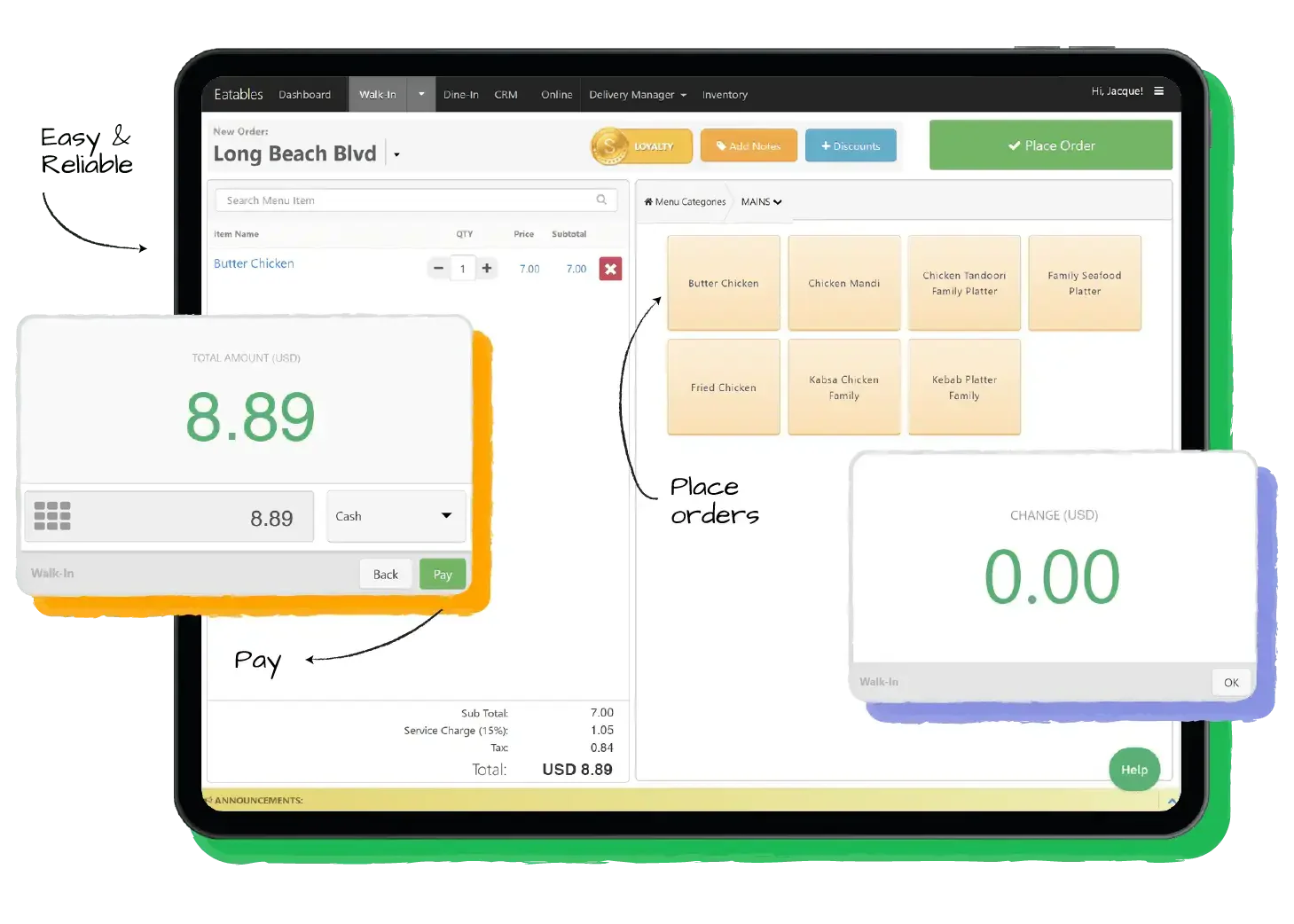 Sapaad is an F&B POS system that offers features such as online ordering integration, kitchen display systems, and detailed sales reports. Sapaad’s point of sale system in Malaysia enhances restaurant operations by introducing automated order taking and simplifying payment processing for a smoother service workflow.
Sapaad’s point of sale system in Malaysia enhances restaurant operations by introducing automated order taking and simplifying payment processing for a smoother service workflow.
Why Sapaad: It delivers a user-friendly interface, strong support services, and comprehensive integrations.
Pricing: Starts from around RM165 per month (from $39.99/month).
Restaurants, cafés, and food & beverage operations that want a cloud-based POS system with integrated inventory, online ordering, and real-time reporting.
| Pros | Cons |
|---|---|
|
|
15. Genius
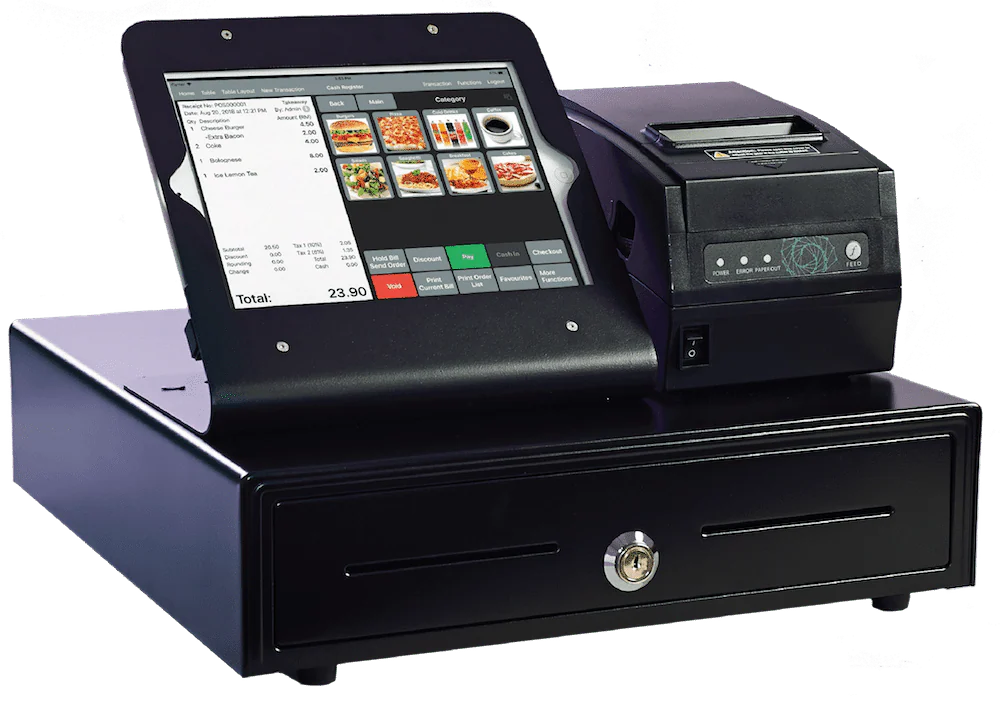
Genius POS System software is a comprehensive POS solution designed for various industries, including retail and food, and beverages. This POS software offers features such as sales management, inventory tracking, customer relationship management, and employee management.
Why Genius POS: It offers user-friendly setup, strong local support, offline capability, and tailored features for F&B and retail workflows.
Pricing: Est. Around RM 1,500 – RM 3,000 setup fee, depending on industry module selection, hardware counter kits, and local support tiers.
Restaurants, cafés, fast-food outlets, and retail locations in Malaysia that need an intuitive iPad-based POS solution with table management and cloud reporting.
| Pros | Cons |
|---|---|
|
|
16. EasyStore
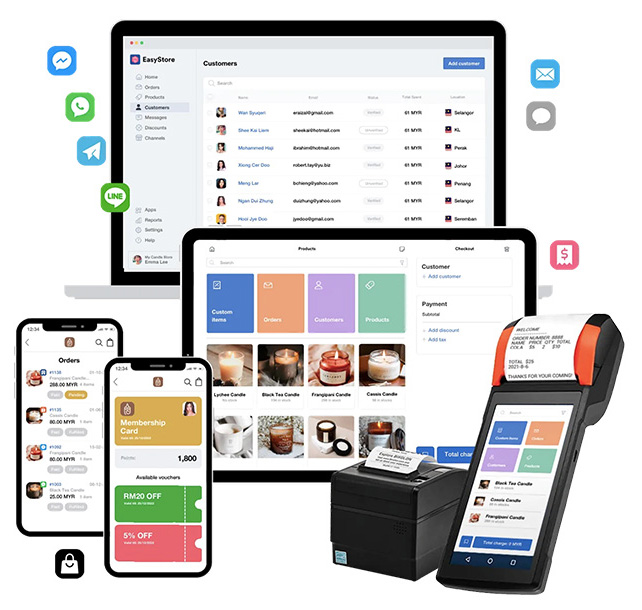
EasyStore is a versatile POS system. It offers features such as sales tracking, inventory management, and customer relationship management. EasyStore point of sales Malaysia is known for its integration capabilities, making it a preferred choice for businesses looking to manage both online and offline sales from a single system.
Why EasyStore: It provides a unified commerce platform, letting you turn mobile, tablet, or desktop into a POS, sync inventory in real-time across sales channels, engage loyalty members smoothly, and scale effortlessly from pop-ups to full stores.
Pricing: Standard plan from RM199 per month.
Retailers who operate both online and physical stores, especially those needing cross-channel management of inventory, sales, and customer data across devices and outlets.
| Pros | Cons |
|---|---|
|
|
Overall Comparison of POS System for Malaysia Businesses
| Provider | Inventory Management | Payment Integration | Ease of Use | Data Enrichment |
|---|---|---|---|---|
| HashMicro | ||||
| ConnectPOS | ||||
| Shopify | ||||
| Sapaad | ||||
| Loyverse POS |
Key Features to Look for in a Malaysian POS System
A POS system in Malaysia should do more than just process payments; it also helps control inventory, support loyalty programs, and accelerate decision-making through real-time data. If your business handles purchasing and finance, connecting POS data with an ERP system helps reduce duplication and keep numbers aligned.
| Key Feature | Description | Business Benefit |
|---|---|---|
Real-Time Reporting & Analytics | Provides live sales data, best-selling products, profit margins, and outlet performance tracking through dashboards. | Helps retailers make faster decisions, identify slow-moving products, and improve purchasing strategies. |
Inventory Control & Omnichannel Ready | Automatically updates inventory across stores, online platforms, and marketplaces in real time. | Reduces stock mismatches and overselling while ensuring consistent inventory visibility across channels. |
Customer Loyalty & Promotions Tools | Includes loyalty programs, promotions, and customer purchase tracking features. | Encourages repeat purchases and enables more targeted and personalized marketing campaigns. |
Ease of Use & Offline Capability | Features an intuitive interface and allows transactions even during internet disruptions. | Minimizes staff training time, reduces cashier errors, and ensures business operations continue smoothly offline. |
Multi-Outlet & Staff Management | Supports centralized management, role-based access, pricing control, and employee performance monitoring. | Improves operational consistency and simplifies management across multiple retail branches. |
Reliable Local Support & Training | Offers responsive local customer support and structured onboarding or staff training. | Reduces downtime during implementation and helps businesses maximize system usage faster. |
e-Invoice & Local Multi-payment Support | Supports Malaysian e-invoicing requirements and multiple payment methods such as cash, cards, and e-wallets. | Enhances customer convenience, speeds up checkout, and ensures compliance with local regulations. |
Role of POS Software in Malaysian Business
Across Malaysia, businesses of all sizes rely on POS software to streamline transactions, manage inventory, and improve customer experiences. By streamlining digital order tickets and kitchen workflows, a dedicated F&B POS minimizes operational chaos and cross-contamination risks, supporting your staff in maintaining rigorous restaurant sanitary guidelines.
1. Retail Industry
Retailers in Malaysia face the challenge of managing multi-location stock, seasonal demand, and high transaction volumes. A centralized POS system allows real-time stock monitoring, barcode scanning, and automated reporting. Solutions like an ERP POS system in Malaysia help retailers make data-driven sales decisions and minimize human errors.
2. F&B, Restaurant, and Café
F&B businesses operate in a fast-paced environment where speed and accuracy are critical. POS software supports table management, order synchronization, split billing, kitchen display workflows, and e-menu ordering for restaurants and cafés during peak hours.
3. Franchise and Multi-Outlet Businesses
For franchises and multi-branch operations, manual coordination can cause data inconsistencies. A cloud-based POS enables centralized monitoring, unified pricing, consolidated reports, and outlet performance tracking across different locations.
4. Cloud Kitchen and Food Truck Operations
The rising trend of cloud kitchens and mobile food trucks in Malaysia demands a flexible and portable POS system. Integrated cloud-based software supports multiple ordering channels, delivery coordination, payment gateways, and accounting data flow.
5. Location-Specific Retail and F&B Needs
Retail and F&B businesses in Malaysia often face different sales patterns, customer traffic, payment preferences, and stock movement across locations such as Kuala Lumpur, Selangor, Penang, and Johor Bahru. A POS system helps track branch performance, local inventory demand, and outlet activity across malls, cafés, food courts, high-street stores, or regional branches.
In summary, POS software helps Malaysian retail and F&B businesses manage transactions, inventory, orders, branch performance, and location-based stock needs in one operational flow.
Common Mistakes When Choosing POS
- Choosing based on price alone. The cheapest option might not have the features you need. The most expensive might have features you’ll never use. Match features to your actual workflow.
- Ignoring offline capability. Test what happens when internet goes down. Can you still take cash payments? Will the system save transactions and sync later? This matters during busy periods.
- Not testing with your actual products. If you sell items with variants (sizes, colors, modifiers), test how the POS handles them. Some systems make this easy. Some make it painful.
- Forgetting about support. When something breaks at 7pm on a Saturday, can you get help? Check support hours and response times. Local support often matters more than features.
- Skipping the integration check. If you use accounting software, check if the POS connects to it. If you sell online, check if inventory syncs. Manual data entry between systems wastes time and creates errors.
POS System Decision Matrix Based on Business Needs
Selecting the right POS system is not just about features or pricing, but about how well it fits your specific business operations. Different industries and business sizes require different capabilities, from basic transaction handling to advanced integrations and reporting. This decision matrix helps you identify which POS solutions align best with your needs based on real-world use cases.
| Business Scenario | Recommended POS | Why It Fits |
|---|---|---|
| Small retail (1–2 outlets) with basic needs | Loyverse POS, StoreHub, EasyStore | Suitable for simple operations, quick setup, and minimal training with essential sales and inventory features |
| Retail with omnichannel (online + offline) | Shopify, ConnectPOS, EasyStore, HashMicro POS | Helps synchronize online and offline sales channels while keeping inventory and order data consistent |
| Growing retail with 2–5 outlets | StoreHub, AutoCount POS, HashMicro POS | Supports multi-outlet operations with centralized monitoring, reporting, and better inventory control |
| F&B café or small restaurant (basic POS) | Loyverse POS, StoreHub, Slurp | Designed for fast-paced transactions with simple interfaces and easy menu management |
| Restaurant with KDS and delivery integration | Eat365, Slurp, Sapaad | Enables smoother kitchen coordination and integrates with food delivery platforms for order management |
| Full-service restaurant with complex operations | Dinesoft, Sapaad, Eat365 | Handles table management, order customization, and more structured kitchen workflows |
| Multi-outlet F&B chain (5+ outlets) | HashMicro POS, Sapaad, Dinesoft | Provides centralized control across branches with consolidated reporting and operational visibility |
| Enterprise-level business needing full integration | HashMicro POS, AutoCount POS | Connects multiple business functions such as inventory, finance, and operations into one system |
| Businesses needing strong accounting integration | AutoCount POS, IRS Software, HashMicro POS | Ensures accurate financial tracking with tight integration between sales and accounting processes |
| Businesses focused on loyalty and CRM | StoreHub, Shopify, ConnectPOS | Supports customer data tracking, promotions, and loyalty programs to improve retention |
| Businesses needing customization or local vendor support | Marvelsoft Solutions, Red Zone Solution, Genius POS | Offers flexibility for tailored features and hands-on support based on specific business needs |
| Budget-conscious startups or SMEs | Loyverse POS, EasyStore | Provides affordable entry options with essential features for getting started quickly |
Ultimately, the best POS system is one that can support your current operations while adapting to future growth. As your business becomes more complex, having a system that integrates across functions and provides clear insights becomes increasingly important. By understanding your business scenario first, you can make a more informed and strategic decision.
How to Choose the Right POS System for Your Business

Choosing the right POS system in Malaysia is crucial, as it affects efficiency, customer satisfaction, and profitability. Here are key factors to help you make the best choice for your business.
- Identify your business needs: Write down your daily operations. How do you take orders? How do you track stock? What reports do you look at? What payment methods do customers use?
- Decide on budget: Monthly subscription or one-time purchase? How much per month can you spend? Remember to include hardware costs (tablet, receipt printer, cash drawer).
- Evaluate features and functionality: Look for systems with comprehensive sales tracking, inventory management, best CRM software, and detailed reporting. Consider mobile compatibility, cloud access, and integration with other business tools.
- Consider usability and training: Choose a user-friendly system that your staff can easily learn and use. Ensure the vendor provides comprehensive training and support to facilitate a smooth transition.
- Check for integration capabilities: To ensure efficient operations, choose a POS system that integrates seamlessly with your existing accounting software, e-commerce platform, CRM software, and other business tools.
- Consider security features: Choose a POS system in Malaysia that prioritizes strong security, such as encrypted transactions and strict user access controls, to safeguard sensitive business and customer data.
- Start with one outlet: If you have multiple outlets, don’t roll out everywhere at once. Test at one location first. Fix problems. Then expand.
By considering these factors, you can choose a POS system that meets your needs, supports growth, and enhances overall business performance. A well-chosen POS system software Malaysia will streamline operations, boost customer satisfaction, and provide valuable insights for strategic decision-making.
Conclusion
Choosing a POS system depends on business size, industry, and operational priorities. The best option is one that matches your current workflow while supporting future growth.
For medium to large multi-outlet businesses, HashMicro may suit connected sales, inventory, and accounting needs. StoreHub is more suitable for smaller operations seeking simplicity, while Shopify POS fits businesses focused on omnichannel sales.
If you want extra confidence before deciding, a free consultation can help map your current process and define practical selection criteria. That way, you compare options with clear benchmarks instead of relying on feature claims.

FAQ About POS System Malaysia
A Point of Sale system combines hardware and software to process daily transactions. For businesses in Malaysia, it serves as the central hub for managing inventory, tracking daily revenue, and handling customer data without relying on manual ledgers.
Pricing varies heavily based on the deployment model. Cloud-based subscriptions typically start around RM90 to RM150 per month, while traditional on-premise setups can require an upfront hardware and software investment of RM3,000 to RM10,000.
A good POS system should handle fast transaction processing, automated stock deduction, and secure payment integrations. For Malaysian businesses, LHDN e-invoicing compliance and SST-ready reporting are also essential. Daily sales reports and employee access controls help minimize errors and cash discrepancies at shift end.
Multi-branch operations require a cloud architecture that syncs data across all locations in real time. The system must be able to consolidate orders from dine-in, takeaway, and third-party delivery apps into a single dashboard to prevent missed orders.
Many modern platforms include an offline mode that allows cashiers to continue taking orders and printing receipts during network outages. However, credit card processing and live inventory syncing will usually remain paused until the connection is restored.