









 Limited to 100 registrants
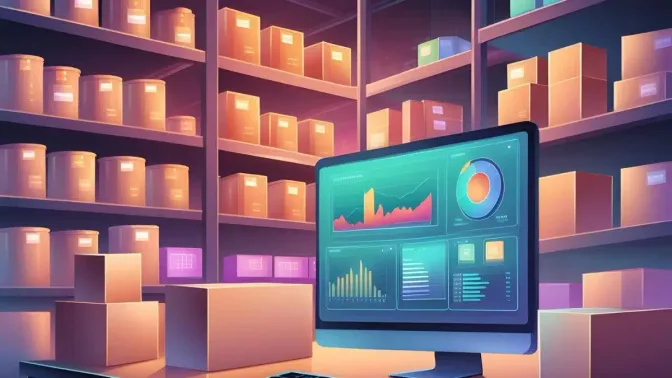
In today’s world, where consumers demand transparency and safety, batch tracking systems are highly relevant. It helps businesses manage risks, comply with regulations, and build trust by ensuring that products are safe and high-quality. This system is vital for managing the movement and status of each product batch from production to distribution.
Additionally, batch tracking is essential for responding quickly to unexpected situations, such as natural disasters. It enables businesses to handle recalls efficiently and safeguard their reputation, ensuring that consumers receive reliable and safe products. Look below, and you will understand what batch tracking is, why it’s important, which businesses need it, the benefits it offers, and how to implement it in your business.
Key Takeaways
Batch tracking organizes items by production features, improving inventory management, order accuracy, and quality control while reducing waste. Batch tracking systems are beneficial, boosting safety and efficiency by allowing precise recalls, tracking expiration dates, and automating inventory methods like FIFO and LIFO. An inventory management system can optimize inventory management with features such as detailed batch recording, real-time tracking, and end-to-end traceability.
Batch tracking organizes items by production features, improving inventory management, order accuracy, and quality control while reducing waste.
Batch tracking systems are beneficial, boosting safety and efficiency by allowing precise recalls, tracking expiration dates, and automating inventory methods like FIFO and LIFO.
An inventory management system can optimize inventory management with features such as detailed batch recording, real-time tracking, and end-to-end traceability.
What is Batch Tracking?
Batch tracking, also known as lot tracking, is a straightforward inventory tracking method that involves grouping items with similar production characteristics. This approach is crucial for inventory traceability as it helps businesses keep track of their products.
By organizing items into batches, businesses can quickly identify and address any quality issues. Batch tracking is important for Filipino businesses that prioritize product quality and customer satisfaction. Implementing batch tracking systems with robust track recording can significantly improve inventory tracking accuracy and reduce product waste.
Who Needs to Use Batch Tracking?

A batch tracking system is a valuable tool for businesses in various industries. By tracking specific batches of products, businesses can improve quality control, reduce waste, and ensure compliance with regulations.
1. F&B industry
In the competitive food and beverage industry, a batch tracking system is crucial for ensuring product safety and quality, since it lets businesses trace ingredient sources and quickly isolate contaminated batches. Those tracing steps are also where your critical control points are monitored, which makes a batch record the evidence an FDA auditor asks for during an HACCP inspection.
2. Healthcare industry
In the healthcare industry, batch tracking is vital for ensuring patient safety and meeting regulatory standards. It enables healthcare providers to swiftly recall defective products by identifying and removing all affected units efficiently.
3. Electronics and automotive industry
In the rapidly growing electronics and automotive industries, a batch tracking system offers significant benefits. It improves product quality by tracking components and identifying defects or quality issues early in the production process.
The Power of Batch Tracking
Beyond ensuring safety and efficiency, modern inventory management practices enhance customer service through advanced tools like e-commerce returns management software. This software is an important factor for maintaining high customer satisfaction in the e-commerce sector.
Batch tracking systems provide significant advantages in safety, compliance, and operational efficiency. Here are the key benefits of implementing batch tracking inventory management:
1. Safety and compliance
Batch tracking systems help businesses swiftly identify and recall defective or hazardous products. This capability ensures customer safety and adherence to regulatory requirements, protecting both the company and its consumers.
2. Expiration date tracking
By monitoring expiration dates, batch tracking helps reduce food waste and enables targeted promotions. It also supports optimized inventory sequencing strategies to manage stock levels effectively.
3. Automated inventory sequencing
Batch tracking allows businesses to use automated inventory sequencing methods such as FIFO (First In, First Out), LIFO (Last In, First Out), and FEFO (First Expired, First Out). These strategies maximize inventory value and minimize waste.
4. Improved product quality
Tracking batch data helps businesses spot and address quality issues, leading to enhanced product quality and higher customer satisfaction. Analyzing batch records can prevent recurring problems.
5. Better supply chain management
With end-to-end traceability, batch tracking improves supply chain visibility. This enables businesses to select top suppliers, streamline processes, and reduce production interruptions.
6. Reduced production costs
Batch tracking identifies inefficiencies in production, helping to lower costs and boost operational efficiency. By refining processes, companies can save resources and enhance profitability.
7. Eliminates human error
Automating batch tracking processes minimizes the risk of human error, ensuring precise and reliable inventory data. This accuracy supports better decision-making and inventory management.
8. Accurate reporting and analytics
Batch tracking systems provide detailed reports and analytics, offering valuable insights for strategic decisions and process improvements. Accurate data helps businesses make informed choices and optimize operations.
How Batch Tracking Speeds Up Product Recalls
Batch tracking helps businesses respond faster when quality issues appear. Instead of checking every unit, teams can isolate the affected lot, stop distribution, trace where it went, and document corrective action with less delay. This targeted approach reduces recall costs, protects safe inventory, and strengthens customer trust. Most importantly, it gives operators better control when product safety, compliance, and brand reputation are under pressure.
A real case study is the 2022 recall of Jif peanut butter. The company J.M. Smucker recalled selected Jif peanut butter products linked to a Salmonella outbreak by using its lot code. The FDA and CDC instructed consumers and retailers to identify affected jars through specific lot codes, which helped narrow the recall to defined products instead of every jar on shelves. The case shows how accurate batch records support faster, more precise recall action.
Batch Tracking vs Serial Number Tracking: Which One Does Your Business Need?
Many businesses confuse batch tracking with serial number tracking, even though they serve different purposes. Understanding the differences is important as they serve different purposes. So here are the key differences between the two:
| Batch Tracking | Serial Number Tracking |
| Group products from the same production run, expiry period, formula, or source materials under one shared code. | Assigns a unique identifier to each unit. |
| Tracks products at the group or lot level. | Tracks products at the individual unit level. |
| Businesses that need to monitor product quality, expiry dates, and recalls at scale. | Businesses that need deep traceability for each unit from receipt to sale, repair, or return. |
| Products include yogurt cups that are produced on the same day. | Products include medical devices, laptops, and automotive parts. |
| Provides practical traceability without adding too much complexity. | Provides deeper control because each unit has its own history. |
| Usually simpler to manage for large volumes of similar products. | Usually more detailed and more complex to manage. |
While they are both used for different kinds of tracking, some businesses can use both to track finished goods by batch while tracking high-value components by serial number for better visibility.
How to Set Up Batch Tracking
Setting up batch tracking for inventory management involves several key steps:
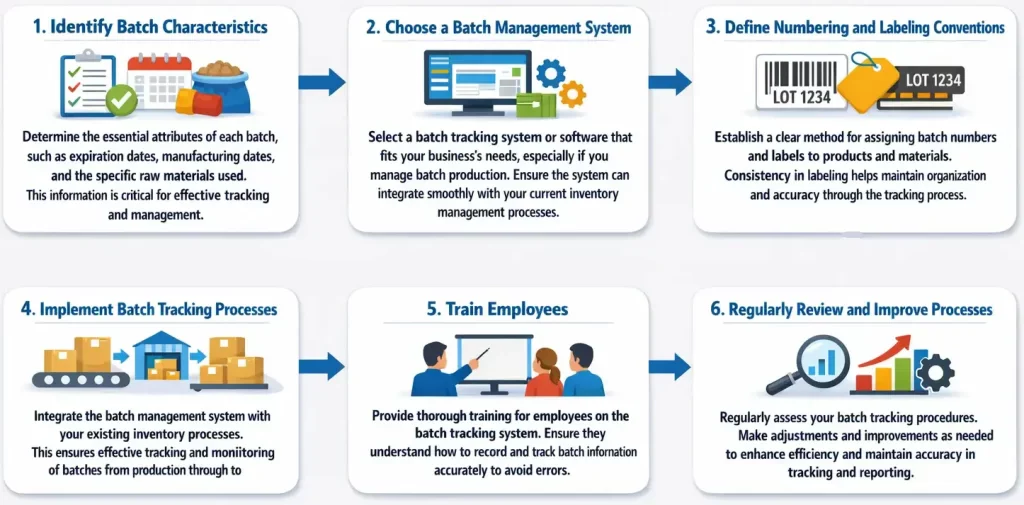
Integration with other inventory management software automates tasks like stock updates and order processing, reducing errors and streamlining workflows. It also enhances data visibility and accuracy by consolidating information, leading to better decision-making and optimized inventory levels.
Barcode, QR Code, or RFID: Which Technology Supports Batch Tracking Best?
Batch tracking becomes much easier when businesses pair it with the right identification technology. Barcodes remain the most common option because they are affordable and easy to use. For many businesses, barcode labels already provide enough support to reduce manual entry and improve lot accuracy. QR codes go one step further by storing more data and giving faster access to detailed product or batch information through a single scan.
RFID offers a different advantage. It allows teams to track tagged items without direct line-of-sight scanning, which helps in high-volume environments where speed matters. However, RFID usually costs more to implement, so it makes more sense for large-scale operations, high-value inventory, or businesses with complex warehouse movement.
There is no single best technology for every company. Barcodes suit most day-to-day batch tracking needs, QR codes work well when businesses want richer data access, and RFID fits operations that need faster automation and broader visibility. The best choice depends on your product volume, budget, and how much scanning effort your team can realistically manage.
What is a Batch Tracking Software or Batch Inventory Management System?
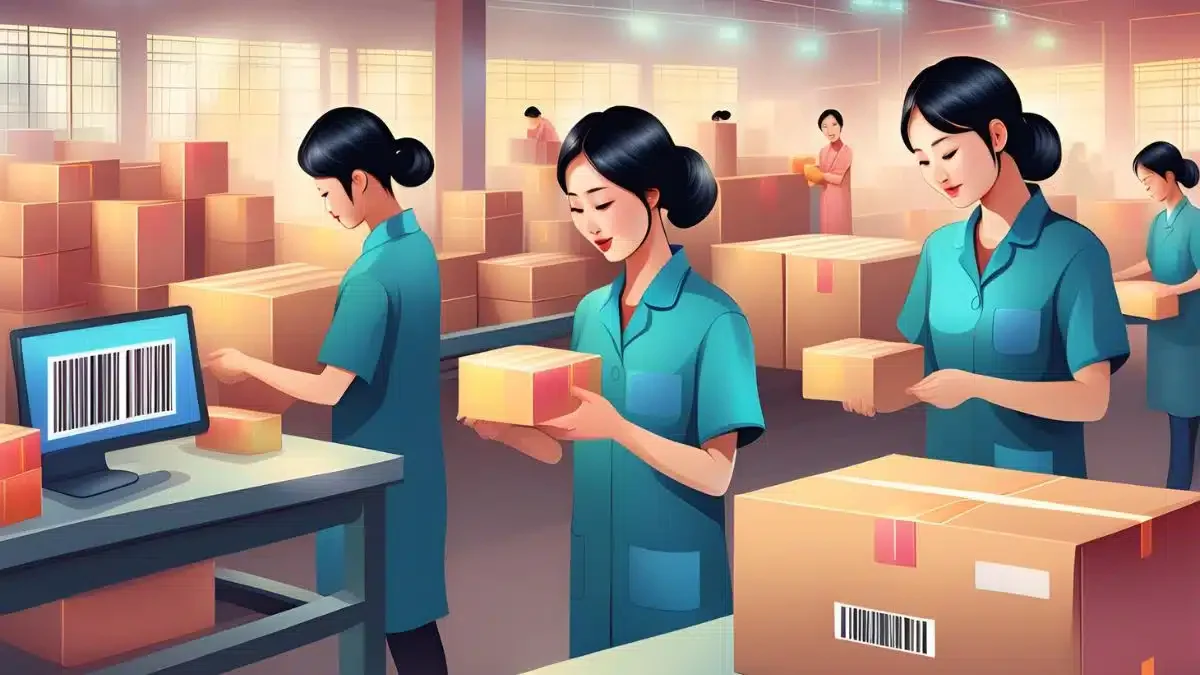
Batch tracking software, or a batch inventory management system, is a specialized tool designed to optimize batch tracking and enhance inventory management. It offers features such as batch recording, tracking, monitoring, end-to-end traceability, automated reporting, compliance management, and integration with other systems.
This software simplifies the batch tracking process, boosts traceability, ensures compliance with industry standards, and provides real-time visibility into inventory data. It is crucial for businesses that need efficient batch tracking and inventory management solutions.
Key Features and Functionalities:
- Batch Recording
The software enables businesses to record detailed information about each batch, including batch numbers, manufacturing and expiry dates, and other critical data. This ensures comprehensive tracking and management. - Batch Tracking and Monitoring
Businesses can monitor the movement and location of batches throughout production and distribution. This feature ensures accurate inventory management and enhances traceability. - End-to-End Traceability
Batch tracking software provides complete traceability of products, allowing businesses to follow the history and journey of each batch from production to delivery, improving oversight and accountability. - Automated Reporting and Analytics
The software generates detailed reports and analytics, offering insights into batch tracking processes, inventory levels, and overall performance. This data helps in making informed business decisions. - Compliance Management
The system helps businesses meet industry-specific regulations and standards by offering built-in compliance checks and maintaining necessary documentation, reducing the risk of non-compliance. - Integration with Other Systems
It connects smoothly with other business systems such as ERP (Enterprise Resource Planning) and CRM (Customer Relationship Management), ensuring accurate data synchronization and enhancing overall workflow efficiency.
Conclusion
Batch tracking is crucial for businesses as it manages product batches from production to distribution, ensuring quality and enabling efficient recalls when issues arise. This system protects consumers and maintains brand reputation by addressing potential problems promptly.
Implementing batch tracking systems improves safety, product quality, and operational efficiency. It enables swift recalls, optimizes inventory, and reduces costs. Advanced software solutions enhance these benefits by providing real-time visibility and integrated inventory management.
FAQ for Batch Tracking
Batch tracking helps businesses monitor expiry dates, ensure product safety, and quickly isolate defective goods, which is critical for food safety and regulatory compliance.>
Industries such as food and beverage, pharmaceuticals, retail, and manufacturing rely heavily on batch tracking due to strict safety, quality, and compliance requirements.>
Yes, small businesses can start with manual methods like spreadsheets, but they often shift to digital systems as operations grow and become more complex.>
Common challenges include inconsistent batch numbering, manual data entry errors, lack of system integration, and difficulty tracking across multiple locations.>