









Ever noticed how challenging it is for construction companies to keep their complex workflows under control without a construction ERP system? Construction projects often face hurdles such as fragmented workflows, unclear budgeting, and poor resource coordination.
A construction ERP addresses these challenges by unifying processes, improving visibility, and ensuring every phase of the project runs more efficiently. According to Future Market Insights, the market is forecast to grow at a CAGR of ~7.7% through 2034/2035, roughly doubling in size over this period.
This article lists 12 strong systems, including HashMicro Construction ERP Software. If you want a solution that fits your workflow, you can also request a free demo to explore HashMicro’s features firsthand. Let’s explore the quick overview below!
Key Takeaways
A Construction ERP system is a software designed to help construction companies integrate various business aspects.
The right Construction ERP should fit your needs, support growth, and help teams work more efficiently.
Features of the Construction ERP system, such as project management, financial management, construction inventory management, human resource management, and more, will greatly benefit businesses.
Best Construction ERP Systems List
| Brand | Best for | Pros | Cons |
|---|---|---|---|
| Acumatica | Cloud ERP with flexible project accounting and scheduling. | Seamless integration with other software, Provides detailed analytics and reporting, Cloud-based for accessibility anywhere, Regular updates to enhance performance. | Limited and difficult customization options, The implementation duration can take a long time, Higher cost compared to some competitors. |
| SAP | ERP for financials, projects, and analytics. | Wide scalability, Extensive integration process, Can provide real-time reports. | Less responsive customer service, Lack of transparency on pricing, Less intuitive interface. |
| HashMicro | Cloud-based system for project tracking and cost estimation. | Offers collaboration features that improve communication, Effective raw material tracking and inventory management, Centralized document storage, Customizable and expandable as the business grows, Seamless integration with other modules and third-party systems. | Implementation time may vary depending on the required customization, New users may require initial training, Total implementation costs may increase, Smaller contractors may find the feature scope excessive. |
| Oracle | Enterprise tools for construction planning and budgeting. | Customizable workflows to suit business needs, Real-time data analysis and insights, Scalable for businesses of all sizes, Comprehensive reporting tools. | Less than optimal mobile accessibility, Steep learning curve for new users, High implementation and subscription costs. |
| Procore | Centralized platform for project documents and delivery. | Accessible via mobile, User-friendly, Offers real-time data synchronization, Customizable dashboards for better insights, Strong data security features. | Less responsive customer service, Lack of flexibility, Limited advanced reporting options, Overwhelming notifications. |
| Sage | Construction accounting and estimating with real-time insights. | Comprehensive project management features, Supports detailed financial tracking and reporting, Streamlines communication across teams, Offers advanced scheduling tools. | Software is not cloud-based, Less responsive customer service, Higher upfront costs for implementation |
| Scale Ocean | Cloud platform for scheduling, workforce, and cost control. | Comprehensive training and support, User-friendly and intuitive interface, Robust reporting and analytics capabilities, Flexible and scalable for growing businesses. | Limitations on integration with other systems, Higher licensing costs for additional users, Customization options can be limited. |
| Epicor | ERP unifying financials, operations, and project management. | Customizable to the unique needs of each business, Able to provide real-time report data, Scalable for growing businesses, Secure cloud storage for easy access. | No free trial option, Steep learning curve, Initial setup may take time. |
| Smartsheet | Work tool with custom workflows and Gantt charts. | Simple and easy-to-understand interface, Efficient workflow automation and collaboration, Fast setup with minimal configuration required, Regular updates for improved functionality. | Deep learning curve for new users, Lacks integration capabilities with other systems, Limited customer support response time. |
| Monday.com | Visual project tracking with automated workflows. | Ease of feature customization, Intuitive and user-friendly interface, Highly scalable for businesses of all sizes, Strong data security and backup features. | Some automation does not always work well, Relatively high implementation price, Limited third-party plugin support. |
| Dynamics 365 | ERP/CRM for planning, accounting, and analytics. | Accessible using mobile, Comprehensive features that can improve efficiency, Cloud-based for remote access, Customizable dashboard for personalized workflow. | Steep learning curve, Less responsive customer service, Occasional system slowdowns during peak hours. |
| Novade | Field app for inspections, updates, and safety. | The interface is easy to use, easy to navigate, and access features, Has various features that support decision-making, Provides real-time data for accurate reporting, Regular updates improve system functionality. | Limited feature customization, Integration with third-party applications is difficult, Initial setup requires technical expertise. |
What is Construction ERP Software?
Construction ERP is a software system specifically designed to help construction companies manage various aspects of their business in an integrated manner. It combines various functions such as project management, inventory, finance, and purchase management solutions for construction in one integrated platform.
Meanwhile, general ERP supports broad business functions but often lacks construction-specific controls. Construction ERP manages the entire project lifecycle through cost codes, budget-versus-actual tracking, committed costs, subcontractor management, change orders, construction inventory, equipment, and multi-project reporting. These capabilities help teams identify overruns early and keep project scope, costs, and schedules aligned.
By centralizing operational and financial data, Construction ERP improves planning accuracy, collaboration, and project control. TrueList reports that 95% of companies see major improvements after implementing ERP, including faster processes, stronger collaboration, and centralized data.
Need to know!
AI in construction ERP optimizes project management and cost control. HashMicro Hashy AI automates scheduling, predicts delays, and provides real-time insights for smoother execution.

Get a Free Demo Now!
12 Best Construction ERP Recommendations for Philippine Businesses
Here are our top picks of the 12 best ERP software for the construction industry that you can consider to improve the efficiency of your construction management:
1. Acumatica
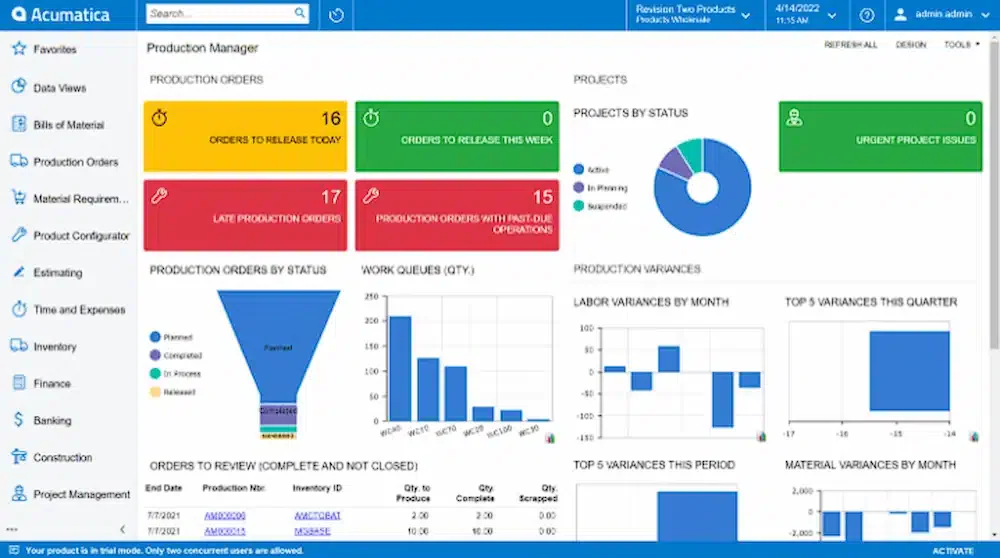
Acumatica Construction is an ERP software designed specifically for the construction industry, offering business management solutions at a relatively affordable price. It includes a range of features essential for managing construction projects, including financial management, human resources, inventory, and project schedules.
One of the key advantages of Acumatica Construction is the integration of artificial intelligence (AI) that helps facilitate data analysis and process automation. This AI can provide deep insights into projects, such as risk analysis and efficiency improvement opportunities.
Features offered by Acumatica-based ERP platform:
- Inventory Management: This feature helps businesses maintain optimal stock levels, track inventory movement, and prevent overstocking or shortages.
- Financial Management: It streamlines key financial processes like accounts payable, receivable, and general ledger, ensuring accurate and efficient financial tracking.
- Integration with Vendors: This feature enables seamless collaboration with vendors by managing purchase orders, supplier relationships, and procurement processes.
- Customer Relationship Management (CRM): Acumatica provides tools to manage customer data, track interactions, and improve customer service and satisfaction.
| Pros | Cons |
|---|---|
|
|
Price: General Business Edition (₱1,231,660/year), Distribution Edition (₱1,847,490/year), Manufacturing Edition (₱2,463,320/year), Construction Edition (₱2,155,405/year), Retail Edition (~₱1,847,490/year).
2. SAP Business One
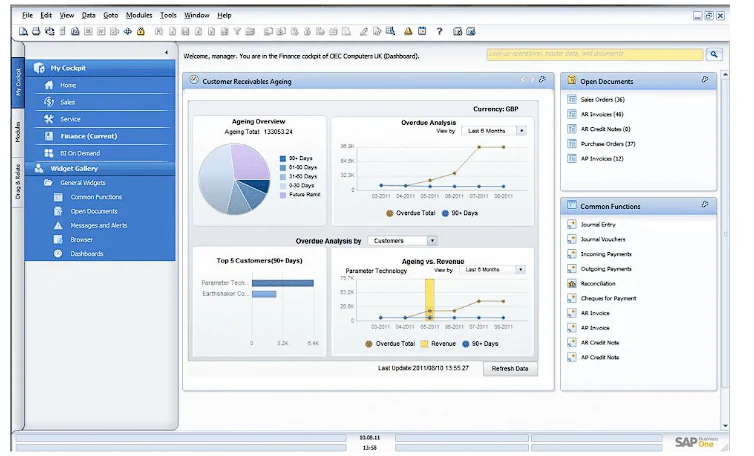
SAP Business ERP for construction is a business management system specifically designed to help construction companies manage their operations more efficiently. This software allows companies to get real-time reports, making it easier to monitor projects, manage budgets, and make data-based decisions.
Another advantage of SAP Business ERP is its high scalability, allowing construction companies to customize the system according to their business needs, both for small and large-scale projects.
Here are the features offered by SAP Business One:
- Project Management: This feature helps manage project timelines, resources, and budgets efficiently, ensuring smooth project execution.
- Accounting Management: This module streamlines financial processes like accounts payable, receivable, and general ledger, providing accurate financial tracking.
- Sales Management: SAP Business One simplifies sales operations by managing orders, invoices, and customer interactions, boosting sales performance.
- Inventory Management: This feature ensures optimal stock levels, tracks inventory movement, and reduces the risk of overstocking or shortages.
- Analysis and Reporting: The system offers real-time data analysis and customizable reports, providing valuable insights for better decision-making.
| Pros | Cons |
|---|---|
|
|
Price: Starter Package User (₱80,164/one-time)+ cloud license (₱2,672/month), Limited User (₱98,447/one-time) + cloud license (₱3,305/month), Professional User (₱189,862/one-time) + cloud license (₱6,399/month)
3. HashMicro Construction ERP System
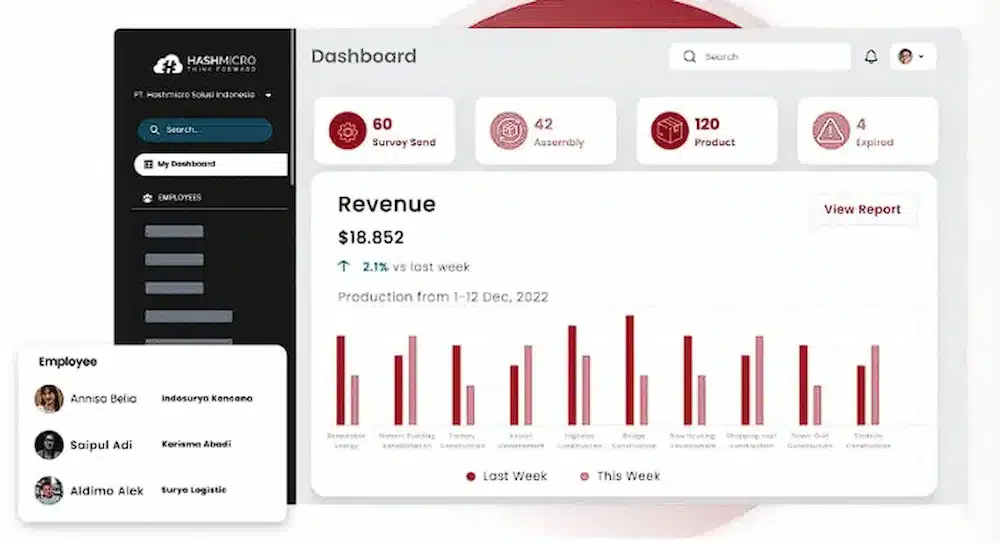
HashMicro provides ERP construction software in Southeast Asia that makes monitoring and managing various construction projects convenient. This software offers complete features to monitor project progress, manage budgets, inventory equipment, materials, labor, and provide evaluation and reporting.
Project monitoring can be done on a daily, weekly, or monthly basis, so that companies can ensure projects are running according to plan. With better control, project progress can be optimally monitored. HashMicro's construction ERP also provides consultations with a team of experts to help meet the complex needs of construction companies.
Here are the features offered by the HashMicro construction system:
- Budget S-Curve Management: This feature allows users to visualize project budget planning and expenses through S-curves graphically.
- Detailed Budgeting and Carry Over: Manage budgets for materials, assets, petty cash, overhead, and subcontractors while transferring unused funds to the next reporting period.
- Integrated Project Issue Management: Helps teams identify, assign, monitor, and resolve project issues while coordinating schedules, safety requirements, and operational standards.
- Automated Project Invoicing: Generates invoices based on completed progress or monthly milestones, accelerating client billing and supporting healthier project cash flow.
- Asset and Accounting Integration: An accounting for construction projects application helps users to track equipment usage, fuel consumption, profit and loss, as well as the balance sheet for each project to provide a clear and detailed financial picture.
| Pros | Cons |
|---|---|
|
|
Price: Custom (Consult vendor for price)
If your growing construction business needs to upgrade its ERP system to handle the increasing orders, then HashMicro can be a good replacement. Try the free demo to see how its inventory management, data centralization, and third-party integration can ensure that your business runs smoothly.

4. Oracle
Oracle Construction is a construction management software designed to simplify construction project management through an intuitive and easy-to-understand user interface (UX). Therefore, it doesn’t take long to implement the system.
This construction scheduling software is equipped with various automation features, such as budget management, project schedules, inventory, and reporting, helping construction companies reduce manual work and improve operational efficiency. With this automation, companies can monitor project progress in real-time and make faster and more informed decisions, ensuring every stage of construction goes according to plan.
Here are the features offered by Oracle construction software:
- Schedule Management: This feature helps plan and track project timelines, ensuring tasks stay on schedule and deadlines are met.
- Construction Project and Cost Control: It provides real-time budget tracking and cost analysis to prevent overspending and manage project expenses efficiently.
- Construction Document Management: Acumatica organizes and stores essential project documents, making it easy to access and share blueprints, contracts, and reports.
- Construction Payment Management: It streamlines payment processes, including contractor billing, progress payments, and compliance with payment terms.
| Pros | Cons |
|---|---|
|
|
Price: Oracle Cloud ERP (₱10,779/user/month), Oracle Cloud EPM (₱9,239–₱15,399/user/month), Oracle Cloud SCM (₱10,779–₱15,399/user/month).
5. Procore
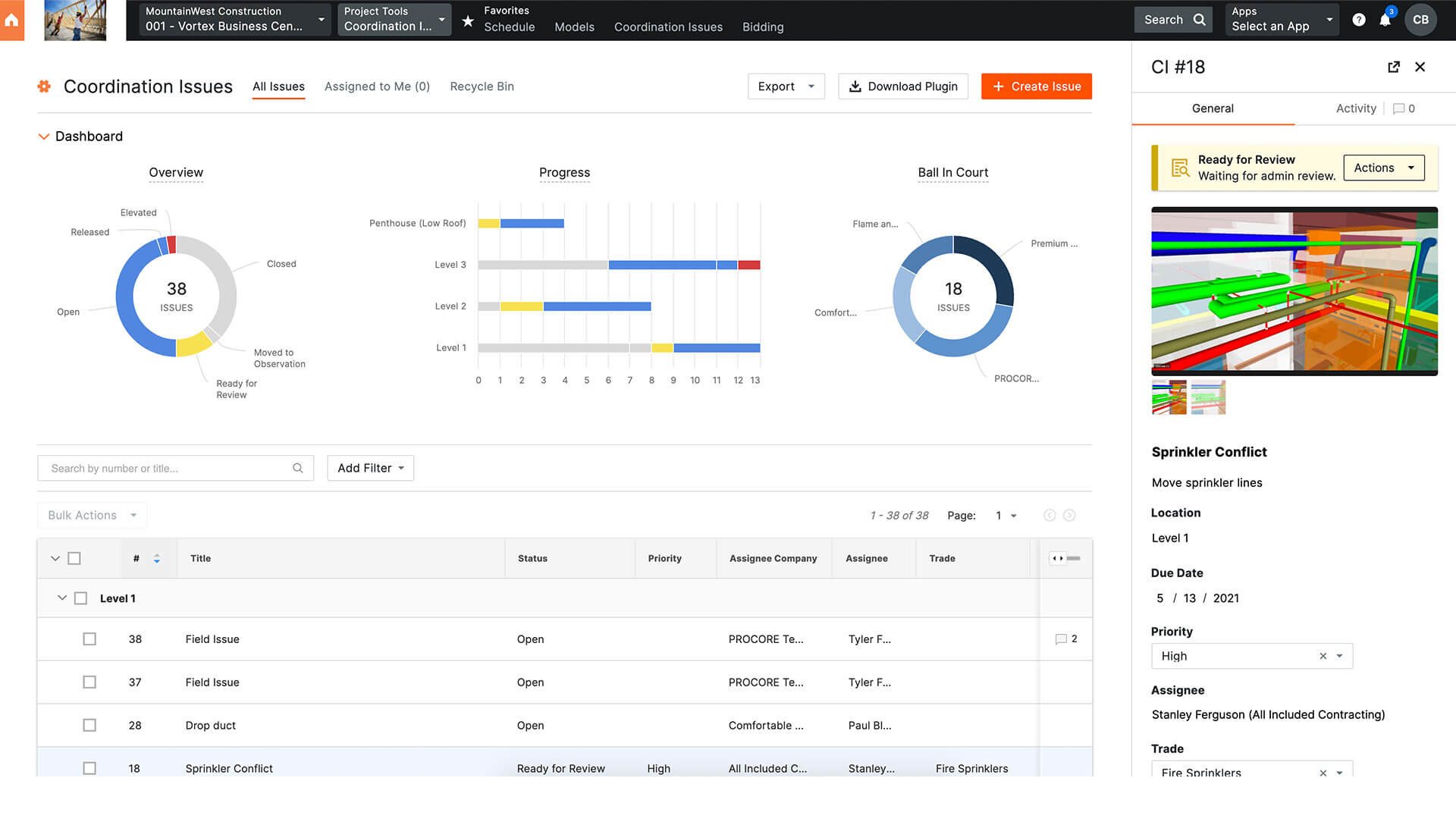
Procore is a construction management software specifically designed to support medium-sized construction projects. It provides various features that help in project management, such as document management, budget tracking, project scheduling, and real-time team collaboration.
With a user-friendly interface, Procore makes it easy for users to access project information at any time, allowing teams to communicate and coordinate efficiently. Procore’s flexibility and scalability make it an ideal choice for mid-sized construction companies looking to improve productivity and project oversight without sacrificing quality.
Here are the features offered by Procore building cost calculation tools:
- Integrated Platform: Procore connects various construction management functions, providing a unified system for seamless data flow and collaboration.
- Mobile Project Management: With mobile access, teams can manage projects, track progress, and update information from anywhere, enhancing on-site efficiency.
- Centralized Information: This feature ensures all project data, from schedules to budgets, is stored in one place, improving accessibility and reducing errors.
- Construction Document Management: Procore organizes and stores essential project documents, making it easy to access and share blueprints, contracts, and reports.
| Pros | Cons |
|---|---|
|
|
Price: Small Team (₱184,788–₱338,778/month), Mid-Size (₱615,960–₱1,693,890/month), Enterprise (₱3,079,800+/month).
6. Sage
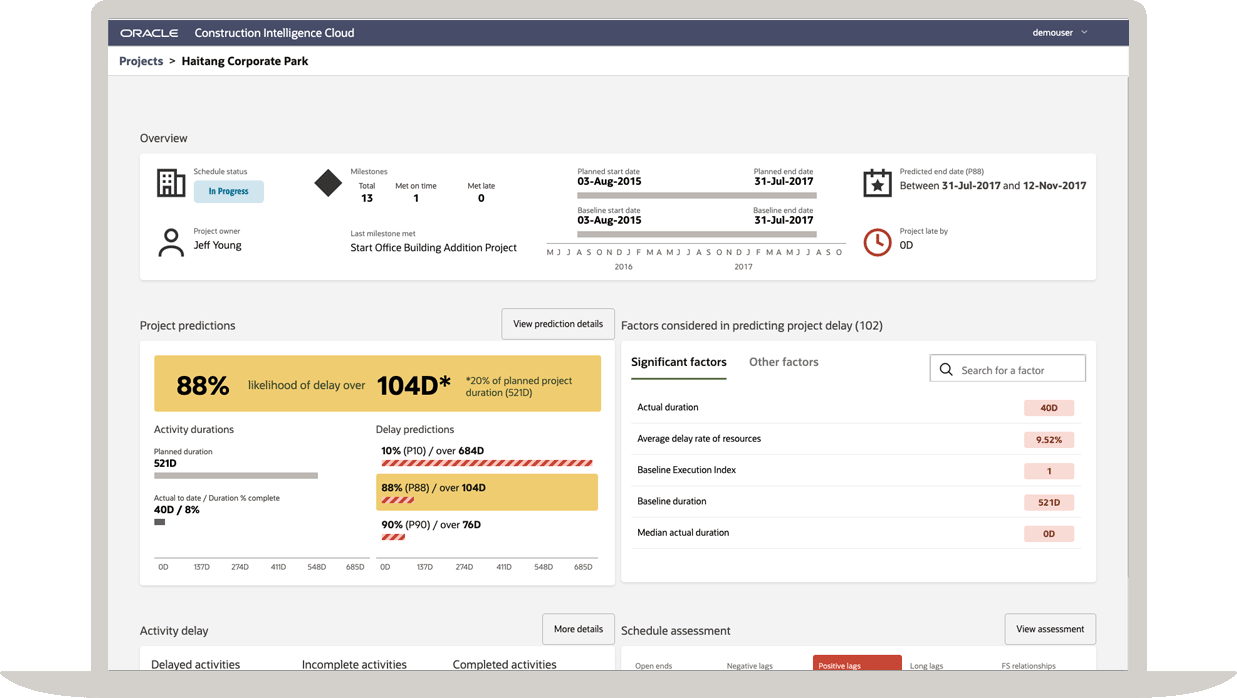
Sage Construction is an ERP system specifically designed to help construction companies manage their projects automatically and efficiently. With features such as financial management, scheduling, inventory tracking, and workforce management, Sage Konstruksi is able to streamline various operational processes.
A major advantage of the system is its ability to automate tasks that were previously done manually, such as budget calculation, cost monitoring, and contract management. This allows construction companies to improve accuracy, reduce errors, and save time in managing their projects.
Here are the features offered by Sage ERP construction:
- Organize Projects and Contracts: Sage helps manage project scopes, timelines, and contracts, keeping everything organized and easily accessible.
- Streamline the Estimating Process: This feature simplifies cost estimation by providing accurate data and templates, reducing time and effort.
- Manage the Entire Bid Process in One System: Sage centralizes bid management, from creating bid packages to evaluating and awarding contracts.
- Manage Projects and Collaborate Effortlessly: It enables real-time collaboration between teams, ensuring everyone stays aligned on project goals and progress.
| Pros | Cons |
|---|---|
|
|
Price: Custom (Consult vendor for price)
7. Scale Ocean
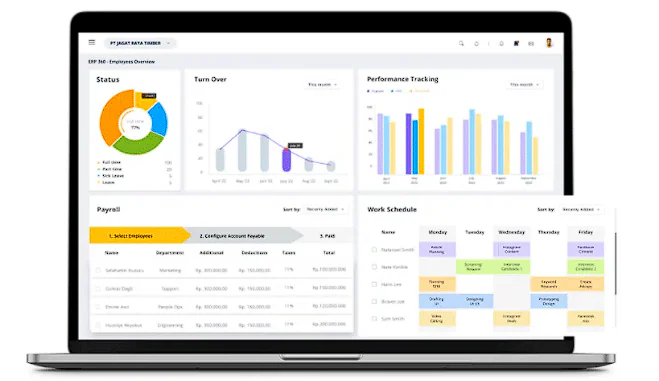
Scale Ocean’s construction management system is a software designed to help companies manage projects more effectively and efficiently. One of its main advantages is the guaranteed data security, where the system is equipped with high-level security protocols to protect the company’s project information, finances, and sensitive data from the risk of cyber threats.
In addition, Scale Ocean is also known for its responsive and quality customer service. Their support team is ready to assist users in addressing any technical issues or questions related to the use of the software, ensuring that companies can run construction projects smoothly and without interruption.
Here are the features offered by Scale Ocean:
- Multi-Location Inventory: Scale Ocean helps track and manage inventory across multiple sites, ensuring accurate stock levels and efficient resource distribution.
- Contract Management: This feature simplifies the creation, tracking, and management of contracts, reducing paperwork and minimizing errors.
- Project Cost Tracking: It provides real-time visibility into project expenses, helping maintain budgets and prevent cost overruns.
- Collaboration Tools: Scale Ocean enhances teamwork with communication and file-sharing features, keeping all project stakeholders connected and informed.
| Pros | Cons |
|---|---|
|
|
Price: Custom (Consult vendor for price)
8. Epicor
 Epicor Software Construction is an ERP solution designed to meet the needs of construction companies with a wide range of integrated features. It offers sales management, which helps manage the entire project sales process, from bidding to contracting, making it easier for companies to track leads and transactions.
The warehouse management feature facilitates inventory management, ensures material availability at the project site, and optimizes the distribution of equipment and building materials. In addition, Epicor also has powerful accounting features to monitor budgets, record expenses, and generate real-time financial reports, supporting more informed and efficient decision-making.
Here are the features offered by Epicor:
- Inventory and Supply Chain: This feature monitors material stock, manages procurement, and coordinates deliveries to ensure resources are available at each project site.
- Sales Management: It supports the entire sales cycle, from lead tracking and bidding to contract management, helping companies monitor opportunities and transactions.
- E-Commerce: This feature enables companies to manage online transactions and connect digital sales channels with inventory, orders, and customer data.
- Accounting and Financial Management: It helps monitor project budgets, record expenses, manage cash flow, and generate real-time financial reports for more informed decision-making.
| Pros | Cons |
|---|---|
|
|
Price: Starting Price (₱6,160/user/month), Base Platform Fee (₱92,394/month), Per-User Range (₱6,160–₱12,319/user/month), Typical Total TCO (₱6,159,600–₱30,798,000), Implementation Cost (₱3,079,800–₱61,596,000), Annual Support/Maintenance (~20% of licence cost).
9. Smartsheet
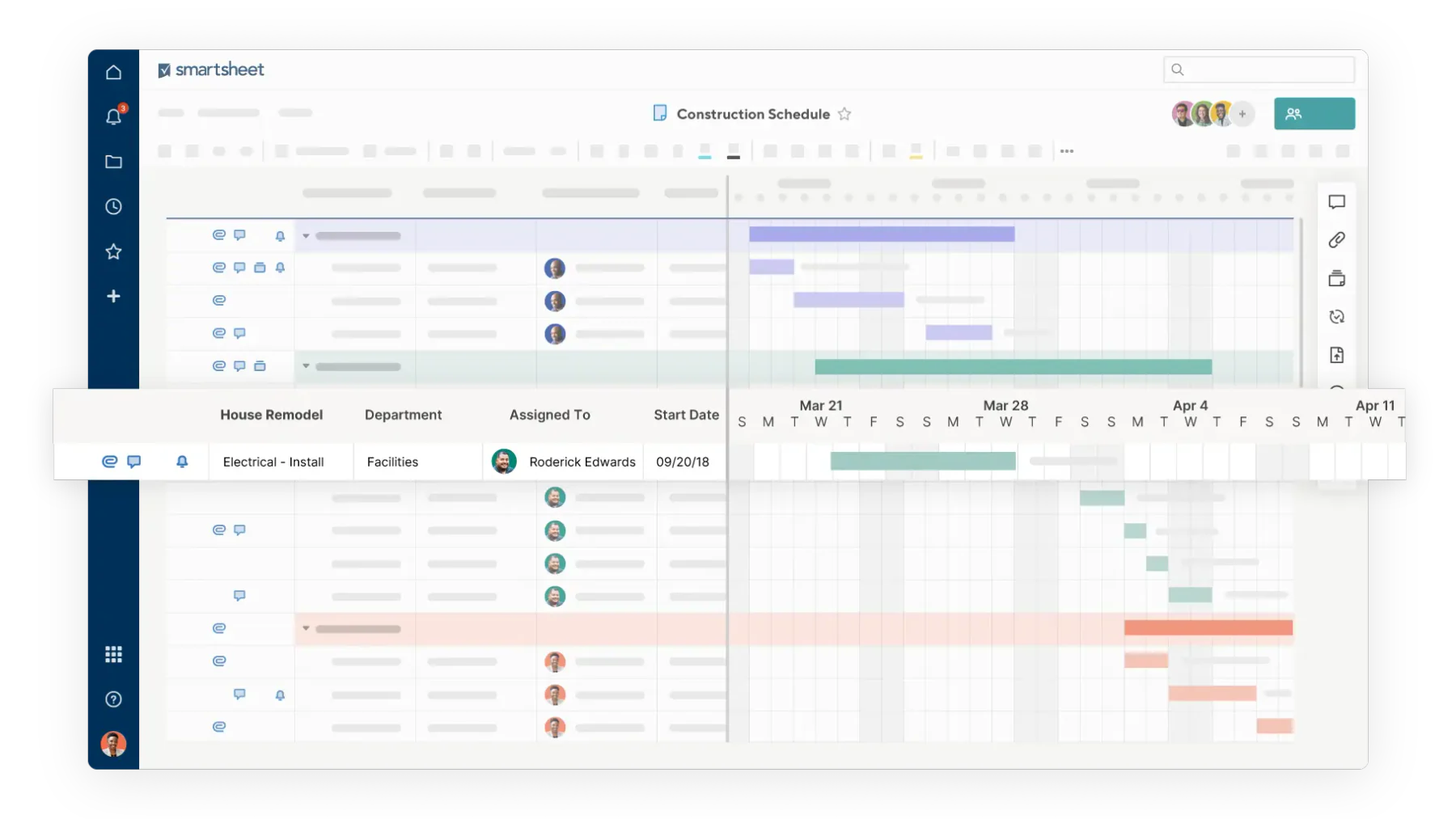
Smartsheet Construction is project management software specifically designed to simplify various aspects of construction projects. Its main advantage is its simple and easy-to-understand interface, which allows users from different backgrounds to quickly master the software without the need for specialized training.
In addition, Smartsheet supports efficient automated accounting processes and collaboration. Users can create schedules, assign tasks, and track project progress in real time. Automation features streamline repetitive tasks, while collaboration capabilities allow teams to work together on a single platform.
Here are the features offered by Smartsheet:
- Document Management: This feature streamlines the organization, storage, and retrieval of documents, ensuring quick access and version control.
- Budget Tracking: It provides real-time monitoring of expenses, helping teams stay within financial limits and avoid overspending.
- Project Management & Scheduling: This tool helps in planning, assigning tasks, and tracking project timelines to ensure efficient execution.
- Resource Allocation: Ensures optimal utilization of resources by tracking availability and distributing workloads effectively.
| Pros | Cons |
|---|---|
|
|
Price: Pro (₱554/member/month, billed yearly), Business (₱1,170/member/month, billed yearly), Enterprise (custom pricing), Advanced Work Management (custom pricing).
10. Monday.com
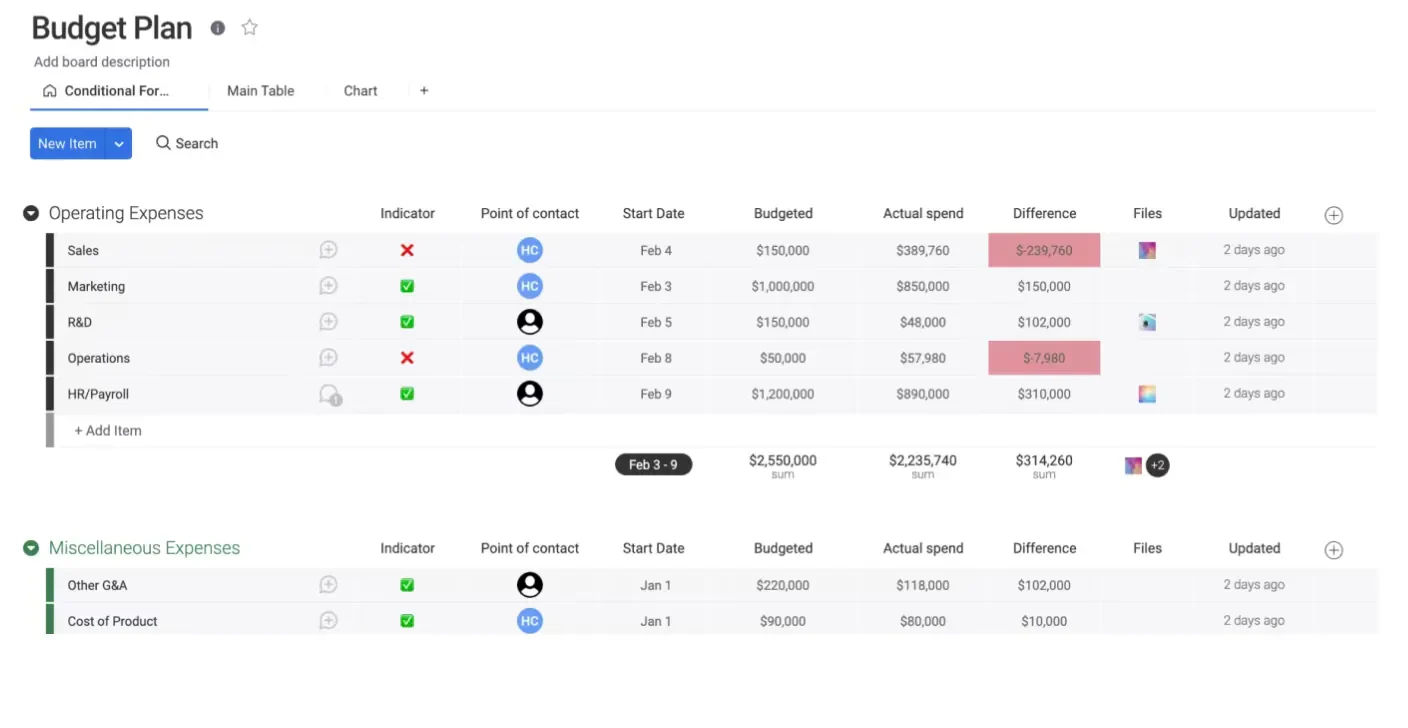 The construction system is a project management platform that allows construction companies to effectively manage and monitor their projects. Its main advantage lies in real-time updates, which allows all team members to see the progress of the project in real time.
With this feature, any changes, assignments, or updates can be instantly noticed by the entire team, minimizing the risk of miscommunication.
Here are the features offered by Monday.com software:
- Financial Management: This feature helps track expenses, manage invoices, and ensure financial accuracy for better budget control.
- Real-Time Updates: Provides instant notifications and status changes, keeping teams informed and improving responsiveness.
- Document Management: Streamlines the storage, organization, and retrieval of documents, ensuring quick access and version control.
- Progress Tracking: Monitors project milestones and team performance, ensuring tasks stay on schedule and objectives are met.
| Pros | Cons |
|---|---|
|
|
Price: Free (₱0, up to 2 seats), Basic (₱554/seat/month; ₱5,544/month total, billed annually), Standard (₱739/seat/month; ₱7,392/month total, billed annually), Pro (₱1,170/seat/month; ₱11,703/month total, billed annually), Enterprise (custom pricing).
11. Microsoft Dynamics
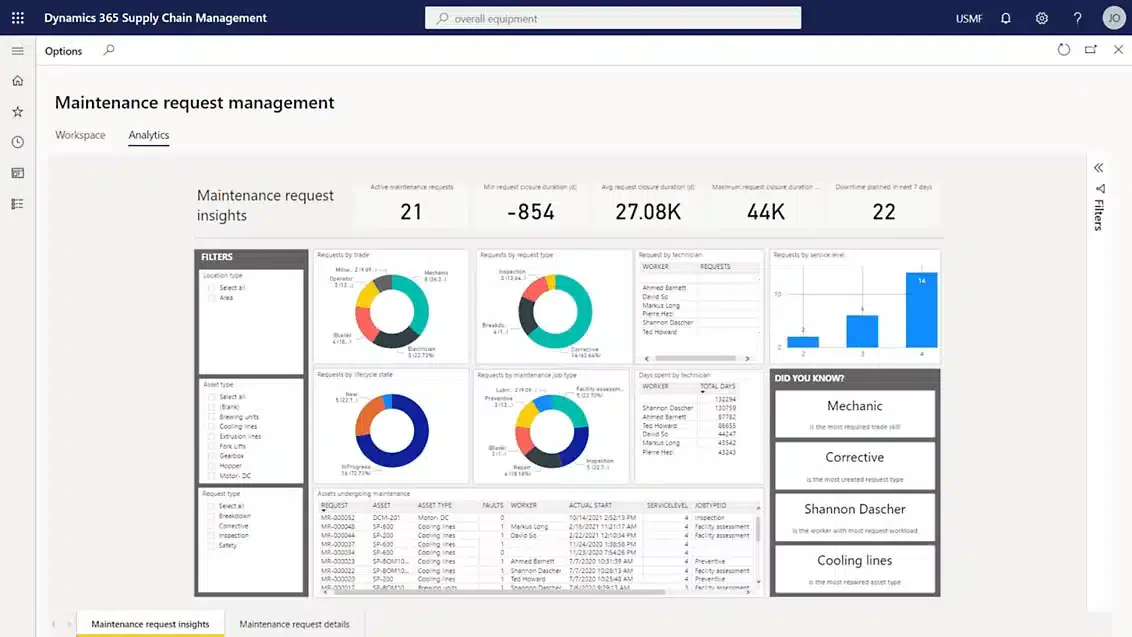
Microsoft Dynamics Konstruksi is an ERP solution designed for large-scale and enterprise construction companies, offering a comprehensive range of features to manage all aspects of the construction business. The software provides tools for project management, finance, human resources, and supply chain.
Here are the features offered by Microsoft Dynamics software:
- Reports and Data Analysis: Generates insightful reports and analytics to help make data-driven decisions and track performance trends.
- Finance and Accounting Management: Simplifies financial operations by managing budgets, invoices, and expense tracking with accuracy.
- Cloud or On-Premises Deployment Options: Offers flexibility to choose between cloud-based or on-premises solutions based on business needs.
- Integration with Third-Party Applications: Seamlessly connects with other software and tools to enhance functionality and workflow efficiency.
| Pros | Cons |
|---|---|
|
|
Price: SMB Contractors—Total First-Year Investment (₱1,847,880–₱15,399,000), Software Licensing (₱923,940–₱6,159,600/year for cloud subscription or ₱1,847,880–₱12,319,200 for a perpetual licence), Implementation Services (₱923,940–₱9,239,400), Ongoing Annual Costs (subscription renewal plus 15–20% for support and maintenance)
Enterprise Contractors—Total First-Year Investment (₱30,798,000–₱307,980,000+), Software Licensing (₱12,319,200–₱123,192,000+/year), Implementation Services (₱18,478,800–₱184,788,000+), Ongoing Annual Costs (₱12,319,200–₱92,394,000+/year).
12. Novade
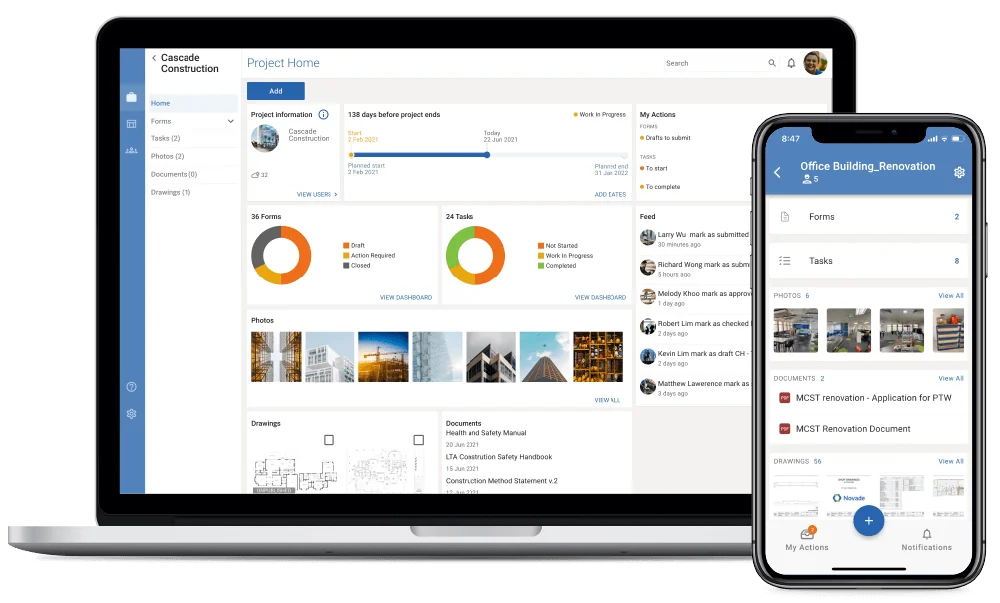
Novade Konstruksi System is project management software specifically designed for the construction industry. It assists companies in managing projects more efficiently. Its main advantage lies in its easy-to-use and navigate interface, which allows users to quickly access various features without the need for complex training.
In addition, Novade is equipped with various supporting features, such as project progress tracking, quality management, and site safety, which provide important data and insights for decision-making. With easy access to real-time information, project managers can respond quickly to issues and ensure projects are on track.
Here are the features offered by Novade software:
- Quality Assurance: Ensures adherence to industry standards and best practices through systematic inspections and performance evaluations.
- Occupational Health & Safety Compliance: Helps maintain a safe work environment by tracking safety protocols, incident reports, and compliance requirements.
- Progress & Resource Tracking: Monitors project milestones, team productivity, and resource allocation to optimize efficiency.
- Asset Management: Facilitates the tracking, maintenance, and utilization of company assets to extend their lifespan and reduce costs.
| Pros | Cons |
|---|---|
|
|
Price: Free (₱0), Standard (from ~₱986/user/month), Premium (custom pricing).
7 Key Features of Construction ERP System
You already know what a construction ERP system is through our previous discussion. However, you will want to know more about the features offered by construction ERP. Here are the features that are commonly offered in construction management software:
| Feature | Description |
|---|---|
| Project Management | Enables real-time planning, scheduling, and tracking so teams can allocate resources, monitor progress, and prevent project delays. |
| Financial Management | Handles budgeting, accounting, reporting, and project cost analysis for accurate financial monitoring. |
| Inventory Management | With effective construction inventory management software, companies can avoid shortages or overstocks by monitoring inventory, managing purchases, and ensuring materials are available at the project site. |
| Human Resource Management (HRM) | Centralizes workforce scheduling, payroll, and attendance tracking to allocate manpower efficiently and monitor worker productivity. |
| Procurement Management | Supports vendor management, purchase requests, delivery tracking, and material quality checks for a faster and more cost-efficient procurement cycle. |
| Reporting & Analytics | Estimating software provides reporting and data analysis features to aid decision-making. Management can analyze project asset operational efficiency, identify problems, and determine strategic steps to improve productivity. |
| Document Management | Stores and organizes contracts, drawings, permits, and other project files in one system for quick access and regulatory compliance. |
Tips for Choosing the Construction ERP System that Suits Your Business
 Choosing the right Construction ERP depends on your current business priorities, project complexity, and how much flexibility you need as operations grow. Use the decision matrix below to match your business situation with the ERP criteria that matter most.
| Business Situation | What to Prioritize | Why It Matters |
|---|---|---|
| Departments manage work through disconnected systems | Business needs and module fit | Choose a system that matches actual workflows and reduces unnecessary process adjustments. |
| Projects combine budgets, materials, labor, and equipment | Complete and integrated features | Integrated tools improve coordination and give teams real-time operational and financial visibility. |
| Project managers need tighter control over margins | Construction-specific capabilities | Job costing, cost codes, committed-cost tracking, and budget-versus-actual reports help teams detect overruns early. |
| The business adds more projects, users, and locations | Scalability and flexibility | A scalable ERP supports additional modules, workflows, and project volumes without requiring replacement. |
| Teams need fast adoption with minimal confusion | Ease of use and implementation | An intuitive interface reduces errors, shortens training, and accelerates daily adoption. |
| Existing accounting and field tools must exchange data | Integration and data migration | Reliable integrations maintain data accuracy and reduce disruption during implementation. |
| Projects require strict contractual or regulatory controls | Compliance and access management | Role-based permissions, approval workflows, and audit trails help teams enforce accountability. |
| Field teams need immediate access to project information | Mobile access and real-time updates | Mobile tools help site teams record progress, documents, costs, and issues without delaying office reporting. |
| Leadership expects strong long-term value | Vendor support and total cost | Responsive support and transparent costs reduce disruption and prevent unexpected implementation expenses. |
Conclusions
Construction ERP helps construction businesses improve efficiency, connect key operations, and make better decisions across projects. With the right system, companies can manage budgeting, procurement, inventory, and project execution more effectively as operations grow.
If you are looking for a more integrated solution, explore HashMicro’s Construction ERP software to see how it can support your business needs.

FAQ for ERP Construction
ERP in construction is an integrated software system that connects project planning, job costing, procurement, inventory, accounting, workforce, equipment, and document management. Construction companies use it to centralize operational and financial data, compare budgets with actual costs, coordinate office and site teams, and control multiple projects from one platform.
Project managers use ERP to create budgets, allocate labor and equipment, schedule activities, approve purchases, track materials, and monitor project costs. The system updates shared data as teams record progress and expenses, allowing managers to identify delays, shortages, and cost overruns early and make informed decisions throughout the project lifecycle.
The three common ERP deployment types are on-premises, cloud-based, and hybrid ERP. Companies host on-premises ERP on their own infrastructure, access cloud ERP through the internet, and use hybrid ERP to combine both approaches. The right option depends on cost, security, customization, integration, and remote-access requirements.
Construction ERP software suits general contractors, specialty contractors, property developers, engineering firms, and multi-project construction companies. These businesses need it when spreadsheets or disconnected tools can no longer coordinate budgets, procurement, materials, labor, equipment, and subcontractors. The system gives office and field teams one reliable source of project data.
Before implementing Construction ERP, a company should map its workflows, define project cost codes, clean existing data, document approval rules, and assign process owners. Management should also identify required integrations and train key users. These steps help the ERP reflect actual operations and reduce disruption during data migration and system adoption.