






Managing food inventory is more demanding than handling non-perishable stock, most food products are perishable, need to be rotated regularly, and must be sold before they spoil. Having the right strategies in place is what separates efficient operations from ones constantly battling waste and shortages.
For food and beverage businesses of any size, manually tracking ingredients, supplies, and kitchen stock across locations is time-consuming and error-prone. Many operations today use integrated systems to bring stock visibility, purchasing, and demand planning into one place.
Key Takeaways
Food inventory management is the process of tracking and overseeing food products from the point they are received to when they are used or sold.
Applying FEFO (First Expired, First Out) ensures that perishable items are used in the right order, directly reducing food waste and spoilage costs.
Accurate inventory forecasting based on historical sales and seasonal trends prevents both stockouts and costly overbuying.
Real-time stock monitoring and supplier lead time management are the two most effective levers for maintaining consistent product availability in F&B operations.
What is Food Inventory Management?
Food inventory management is the process of tracking and overseeing food products from the point they are received to when they are used or sold. This involves managing stock levels, ensuring proper storage conditions, and making sure that perishable items are used before they expire.
Done well, it prevents stockouts, reduces waste by keeping expiry dates in check, and gives businesses the data they need to plan purchasing accurately and maintain consistent product quality.
Integrating food inventory processes with a broader ERP system can further improve accuracy, connecting stock data with procurement, sales, and finance so decisions across the supply chain are based on the same real-time picture.
10 Tips for Managing Your Food Supplies in the Philippines
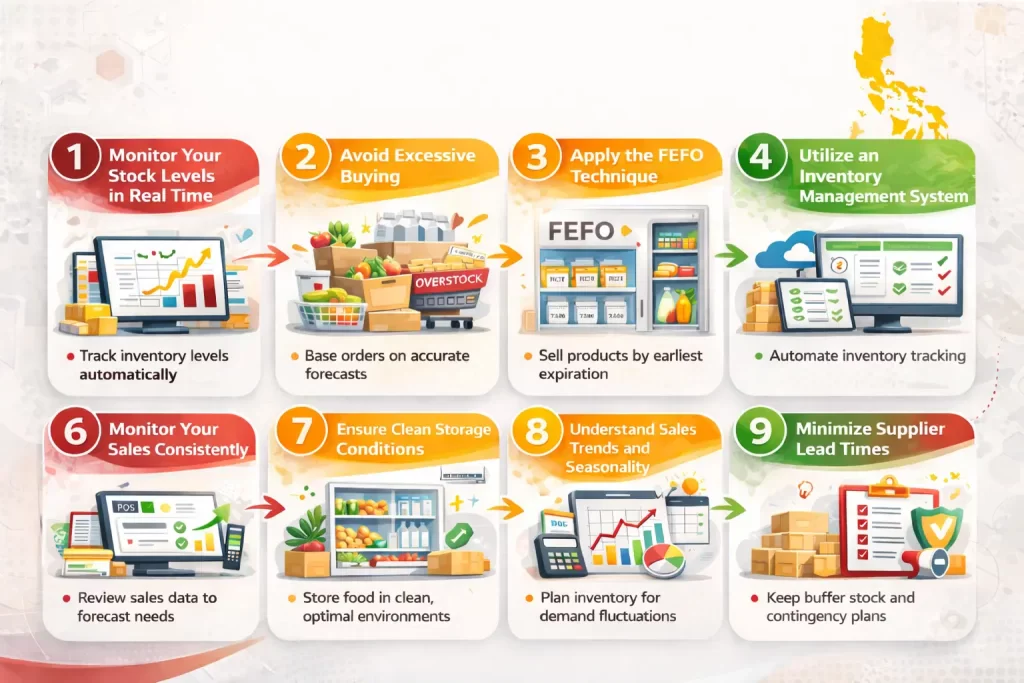
Managing food inventory is a key factor in running a successful F&B business, whether you run a single restaurant or a chain of cafes, a reliable system keeps operations consistent and reduces avoidable losses.
1. Monitor your stock levels in real time
Certain products may sell faster than others, especially during periods of high demand. To avoid shortages or stockouts, it is crucial to monitor your food inventory levels in real time. This ensures that you can respond promptly to changing needs and maintain customer satisfaction.
Relying solely on periodic stock checks may leave gaps in your inventory management process. By implementing an automated inventory management system, you can track stock levels with precision, reduce errors, and optimize your business operations effortlessly. This approach not only improves efficiency but also helps you stay ahead in a competitive market.
2. Avoid excessive buying
Avoiding stockouts doesn’t mean buying more than you need. Overbuying ties up cash in stock that may sit too long, lose freshness, and ultimately become unsellable, a common source of preventable loss in F&B operations.
To manage this effectively, accurate inventory forecasting is essential. By analyzing past sales data alongside current market trends, businesses can predict demand more reliably and keep stock levels balanced without over-committing.
3. Apply the First Expired First Out (FEFO) technique
The First Expired First Out (FEFO) method is a stock management strategy that ensures products with the earliest expiration dates are sold first. Using a dedicated inventory expiration tracking system makes this process significantly easier to manage at scale.
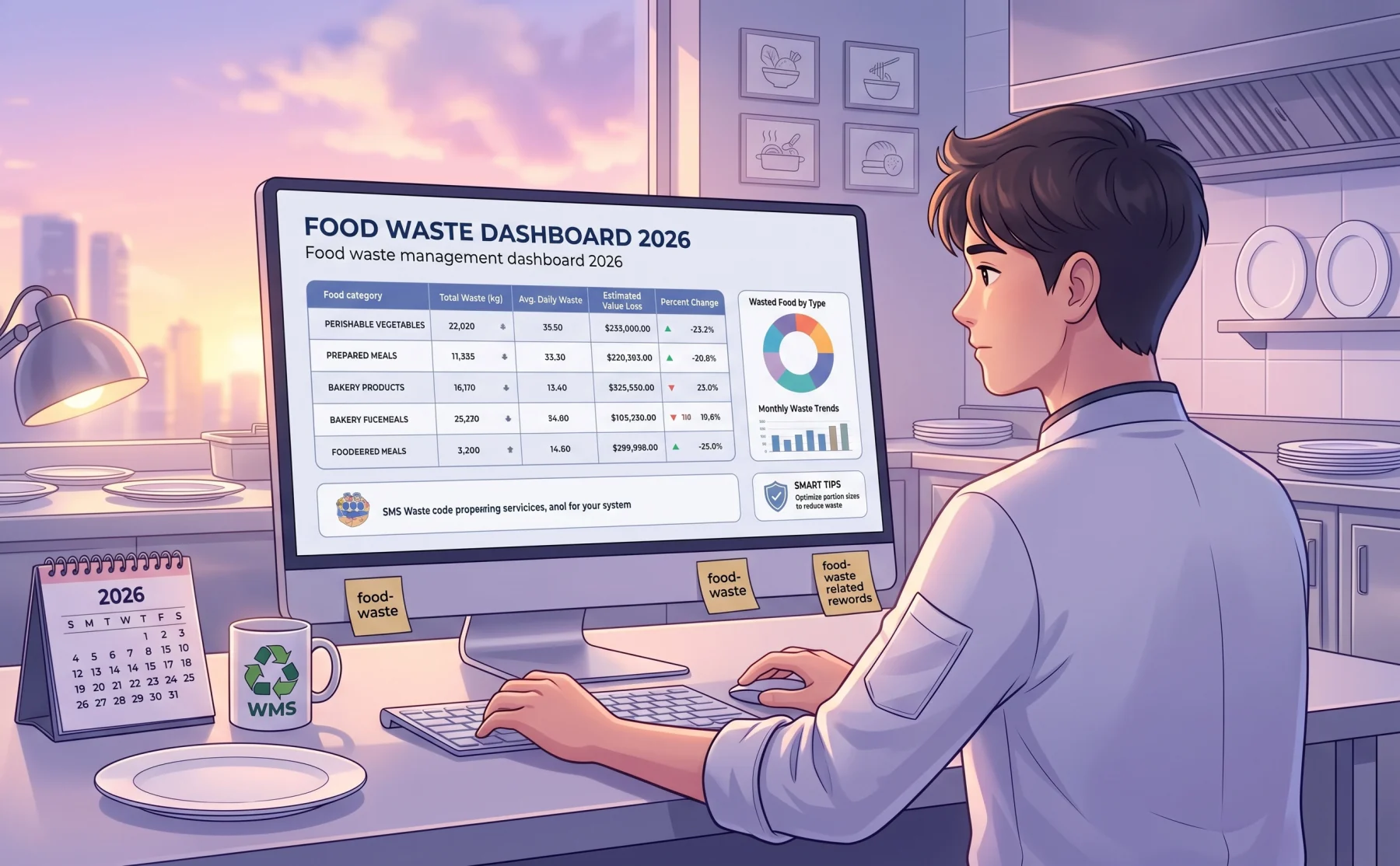
By applying the FEFO technique, you not only improve your inventory turnover, ensuring products are sold promptly but also minimize food waste, leading to more efficient and cost-effective operations.
4. Utilize an inventory management system
Implementing an automated cloud inventory software is vital for optimizing the way you manage your food inventory. This advanced solution lets you accurately forecast inventory requirements based on real-time data and automatically adjust stock levels as needed.
By integrating it with your overall accounting system, you ensure not only efficient and precise inventory control but also better decision-making and improved operational performance across your entire business.
5. Provide training for your employees in food inventory management
To improve your food inventory management, you must provide your employees with proper training. Ensure those responsible for managing inventory know best practices and consistently perform their tasks efficiently. Train them to use your inventory management system effectively to leverage its capabilities fully.
Proper training ensures that everyone handling stock from receiving staff to kitchen teams follows the same procedures consistently. This matters even more in cloud kitchen operations, where one kitchen often prepares orders for several brands at once and every stock-handling mistake shows up directly in food cost.
This matters even more in cloud kitchen operations, where one kitchen often prepares orders for several brands at once and every stock-handling mistake shows up directly in food cost. Employees who understand how to use the inventory system correctly are better positioned to flag discrepancies early and keep data accurate.
6. Monitor your sales consistently
In addition to tracking inventory levels, monitoring your sales is equally important to forecast future inventory needs accurately. By reviewing real-time sales data from your POS system, you can identify which products are performing well and which are not, allowing you to make informed purchasing decisions.
Regularly tracking sales also helps you plan your promotional strategies more effectively. For example, you can offer discounts on slow-moving items or bundle them with your top-selling products, which also helps in preventing spoilage from excess stock.
7. Ensure clean storage conditions
To preserve the quality of your food inventory, it is essential to store items in clean, well-maintained storage areas with the correct temperature and humidity levels. Cleanliness in storage directly impacts the quality and shelf life of your products.
Ensure that suitable Refrigeration must be appropriately matched to each product’s requirements. Items sensitive to heat or humidity should be stored away from direct sunlight and high-moisture areas to prevent premature spoilage.
8. Understand sales trends and seasonality
Recognizing sales trends and seasonal patterns is crucial for effective inventory planning. This insight allows you to prepare for high-demand periods while avoiding unnecessary resource allocation during slower times.
Tracking this data becomes more manageable when sales reporting and stock levels are connected in one system. Purpose-built tools including those designed for e-commerce inventory management offer real-time trend reports that make seasonal planning more precise.
9. Minimize supplier lead times
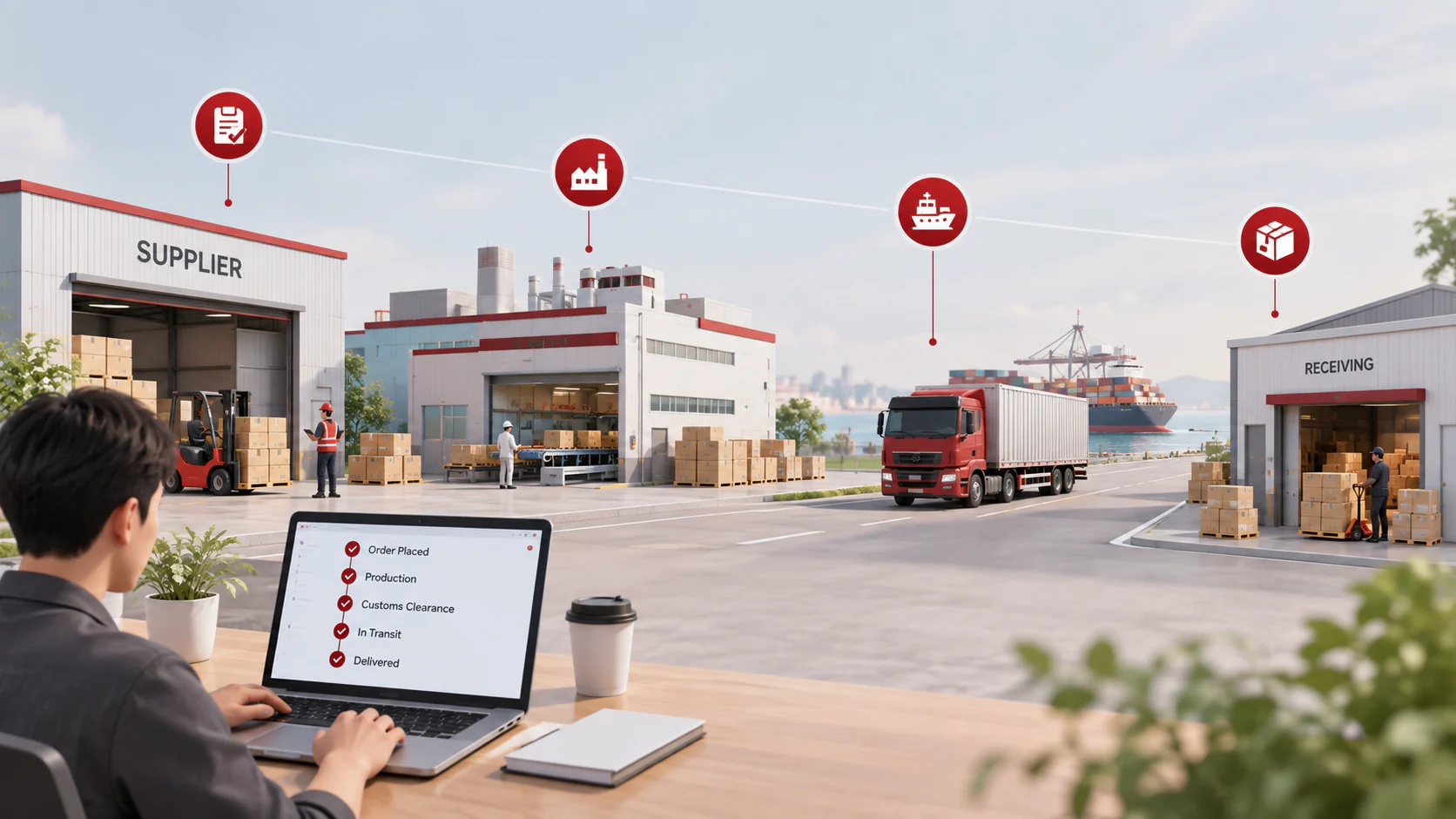
Long lead times can increase the risk of stockouts, particularly during peak demand periods. By collaborating closely with your suppliers to shorten these lead times, you can maintain lower inventory levels without compromising product availability.
Building strong relationships with dependable suppliers can lead to more favourable terms and faster restocking cycles. Understanding how food distribution processes work can help teams negotiate better conditions and reduce the gaps that cause supply disruptions.
10. Prepare for emergencies and contingencies
Regardless of how well you manage your inventory, unforeseen events such as supply chain disruptions, sudden demand surges, or natural disasters can happen. Having a contingency plan in place ensures that your business can continue operating smoothly during such events.
Effective food stock control procedures may involve keeping a buffer stock of essential items, identifying backup suppliers, or creating a quick-response plan for unexpected situations. Being well-prepared for emergencies helps protect your business from potential losses.
Read more: Pharmacy Inventory Management System
What Good Food Inventory Management Looks Like in Practice

Businesses that apply these practices consistently tend to see the same outcomes: lower waste from better stock rotation and demand planning, fewer stockouts because real-time visibility replaces reactive guesswork, and tighter supplier relationships that compress lead times and reduce emergency orders. The cumulative effect shows up directly in margins, less spoilage, less idle capital tied up in excess stock, and fewer last-minute purchases at unfavorable prices.
Understanding how these moving parts connect also makes it easier to identify where a specific operation is losing ground. A restaurant struggling with end-of-week spoilage likely has a rotation or forecasting gap. One dealing with frequent stockouts probably needs better supplier coordination or a tighter reorder trigger. Mapping the problem to the right practice is what turns a general checklist into an actionable improvement plan.
Conclusion
Effective food inventory management directly impacts the quality, efficiency, and bottom line of any F&B operation. Applying consistent practices from real-time stock monitoring to supplier relationship management reduces waste, prevents shortages, and keeps operations running predictably.
For businesses looking to take this further, comparing the available tools and platforms is a practical next step. A review of the top inventory management software options can help teams identify which features align with their scale, product mix, and operational requirements.
FAQ Food Inventory
Effective food inventory management helps businesses prevent stockouts, reduce food waste, control costs, and ensure that customers always have access to fresh products.
Food inventory software automates tracking, improves accuracy, helps forecast demand, reduces waste, and ensures timely restocking, all of which improve operational efficiency.
FIFO (First In, First Out) ensures that older food items are used or sold first to prevent spoilage, reducing waste and improving inventory turnover.