







Managing a warehouse demands accuracy and efficiency, yet many businesses still rely on manual systems that slow operations and increase errors. The best Warehouse Management System (WMS) helps automate inventory processes and optimize storage space.
Research published on ResearchGate notes that La Ruche Logistique increased its order processing capacity by over 230% after implementing warehouse management software, demonstrating how digital systems boost productivity.
In the Philippines, outdated warehouse practices often lead to disorganized data, wasted time, and higher operational risks. Implementing a WMS helps businesses gain better visibility, streamline workflows, and improve overall warehouse performance.
Key Takeaways
WMS has 5 benefits that are very beneficial for your business, one of which is improving the accuracy of stock items.
A WMS is vital because it improves accuracy, cuts costs, and drives customer satisfaction by ensuring goods are stored, moved, and fulfilled systematically.
When selecting a WMS, look for real-time inventory tracking, strong integration with existing systems and scalability to ensure long-term operational success.
A warehouse operations platform in the Philippines helps streamline processes, improve inventory accuracy, and boost overall efficiency.
Top Warehouse Management Systems in 2026



Best Because
Best for retail and wholesale inventory management


Best Because
Best for seamless integration with Microsoft Products Ecosystem

Best Because
Best for multi-location inventory management





What is a Warehouse Management Syst2ems?
A warehouse management system (WMS) is software that controls inventory and daily warehouse operations from receiving to shipping. It creates real-time visibility across stock, locations, tasks, and orders while coordinating each step of the warehouse process flow. Its key functions include:
- Receiving and inspection: Records incoming goods, verifies quantities and condition, and directs items to the correct next step.
- Putaway and storage: Assigns suitable bin locations based on space, item rules, movement frequency, and handling requirements.
- Inventory tracking: Maintains real-time stock by SKU, bin, batch, lot, serial number, or expiry date across warehouse locations.
- Picking and replenishment: Creates efficient picking tasks and replenishes forward-pick locations before stock runs out.
- Packing and shipping: Verifies packed orders, prepares labels and documents, and connects outbound work with carrier processes.
- Returns, labor, and reporting: Standardizes returns, assigns work, measures productivity, and surfaces operational exceptions for faster decisions.
5 Benefits of Warehouse Management Systems
Warehouse management software assigns tasks based on skill, equipment, and location, allowing teams to work more efficiently. It reduces unnecessary travel within the warehouse so employees can focus on higher-value tasks.
1. Optimizes warehouse flow and space
A WMS improves warehouse flow by placing items in optimal locations through smart slotting based on demand and storage needs. It also supports FIFO, LIFO, or FEFO rotation to reduce waste for perishable or date-sensitive items.
2. Real-time visibility
Warehouse automation software provides real-time visibility by using barcodes, RFID, and sensors to track inventory at every stage. With clearer stock data, businesses can forecast demand more accurately and support just-in-time replenishment.
3. Improves labor management
Warehouse management software assigns tasks based on skill, equipment, and location, allowing teams to work more efficiently. It reduces unnecessary travel within the warehouse so employees can focus on higher-value tasks.
4. Traceable materials
A WMS assigns lot, batch, or serial numbers to each item, creating full traceability from receiving to dispatch. Every movement is logged automatically, building a clear audit trail for quality control, recall handling, and compliance requirements.
5. Improved operational efficiency
A WMS boosts efficiency by automating tasks from receiving to shipping and reducing process delays. A study of ERP use in Philippine shoe factories reports a benefit-cost ratio of 1.85 in the first month and 10.4 in months after, that is a strong indicator of long-term ROI.
Quick Overview of The Best Warehouse Management Software
| Brand | Best for | Pros | Pricing |
|---|---|---|---|
| 1) HashMicro | The best end-to-end solution for all types of business needs | 1) Unlimited users 2) User-friendly 3) Scalable 4) Comprehensive features 5) Strong integrations | |
| 2) Brightpearl | Best for retail and wholesale inventory management | 1) Real-time customer data 2) Smooth syncing 3) Efficient order management | |
| 3) Infor | Best for scalable solutions in complex supply chains | 1) Remote access 2) Easy to use 3) Automated approval flow | |
| 4) Microsoft Dynamics 365 | Best for seamless integration with Microsoft Products Ecosystem | 1) Strong suite integration 2) Frequent updates 3) Scalable | |
| 5) Zoho | Best for small to mid-sized businesses needing customizable WMS | 1) Free trial 2) Intuitive dashboard 3) Supports warehouse processes | |
| 6) Focus Softnet | Best for multi-location inventory management | 1) Flexible and customizable 2) Easy to use 3) Convenient document handling | |
| 7) Oracle | Best for large enterprises with global supply chain needs | 1) Predictive analytics 2) Easy navigation 3) Customizable | |
| 8) Logiwa | Best for high-volume e-commerce and 3PL fulfillment | 1) Flexible payments 2) Strong routing tools 3) Fast response | |
| 9) Epicor Kinetic | Best for manufacturing and distribution efficiency | 1) Good system integration 2) Real-time tracking 3) Tracks raw materials | |
| 10) Palms | Best for businesses of all sizes seeking efficient inventory management | 1) Improved logistics accuracy 2) Smooth system integration | |
| 11) Wasp | Best for small to mid-sized businesses looking for efficient inventory tracking | 1) Easy to use 2) Low learning curve 3) Intuitive mobile app | |
| 12) Aptean | Best for comprehensive supply chain visibility | 1) Easy to learn 2) Customizable 3) Supports financial & operational workflows | |
| 13) Fishbowl | Best for growing businesses needing streamlined inventory control | 1) Strong stock management 2) Automated purchase orders 3) Smooth integrations | |
| 14) Acumatica | Best for medium to large businesses seeking scalable solutions | 1) Flexible 2) Scalable 3) Simplifies workflows | |
| 15) Cin7 | Best for retailers, wholesalers, and e-commerce businesses | 1) User-friendly 2) Excellent integrations 3) Strong analytics | |
| 16) ShipHero | Best for e-commerce retailers and 3PL providers | 1) Intuitive UI 2) Strong automation 3) Responsive support | |
| 17) Blue Yonder | Best for large enterprises and retailers seeking advanced supply chain | 1) Highly customizable 2) Strong ERP integrations 3) Robust analytics | |
| 18) Manhattan Associates | Best for large enterprises and retailers needing advanced supply chain | 1) Highly scalable 2) Strong forecasting 3) Detailed analytics |
Recommendation for Various Business Needs
- For businesses needing an end-to-end inventory and warehouse solution integrated with ERP and multiple departments → HashMicro
- For retail and wholesale businesses prioritizing order accuracy and real-time inventory visibility → Brightpearl, Cin7, Fishbowl
- For enterprises managing complex, multi-location, or global supply chains → Oracle, Infor, Blue Yonder, Manhattan Associates
- For manufacturers and distributors requiring real-time tracking and production-linked inventory → Epicor Kinetic, Aptean, Acumatica
- For e-commerce and 3PL operations handling high-volume fulfillment → Logiwa, ShipHero
- For small to mid-sized businesses seeking simple, user-friendly inventory control → Zoho, Wasp, Palms
- For companies operating within the Microsoft ecosystem or needing flexible enterprise workflows → Microsoft Dynamics 365, Focus Softnet2
18 Top Warehouse Management Systems in the Philippines
Choosing the best warehouse management software for your business can be difficult, given the number of systems on the market. Therefore, to solve your confusion, we present a list of the best warehouse management software in the Philippines.
Below, you’ll find a list of the 18 top warehouse management systems in the Philippines, which cover their features, strengths, and weaknesses.
1. HashMicro WMS
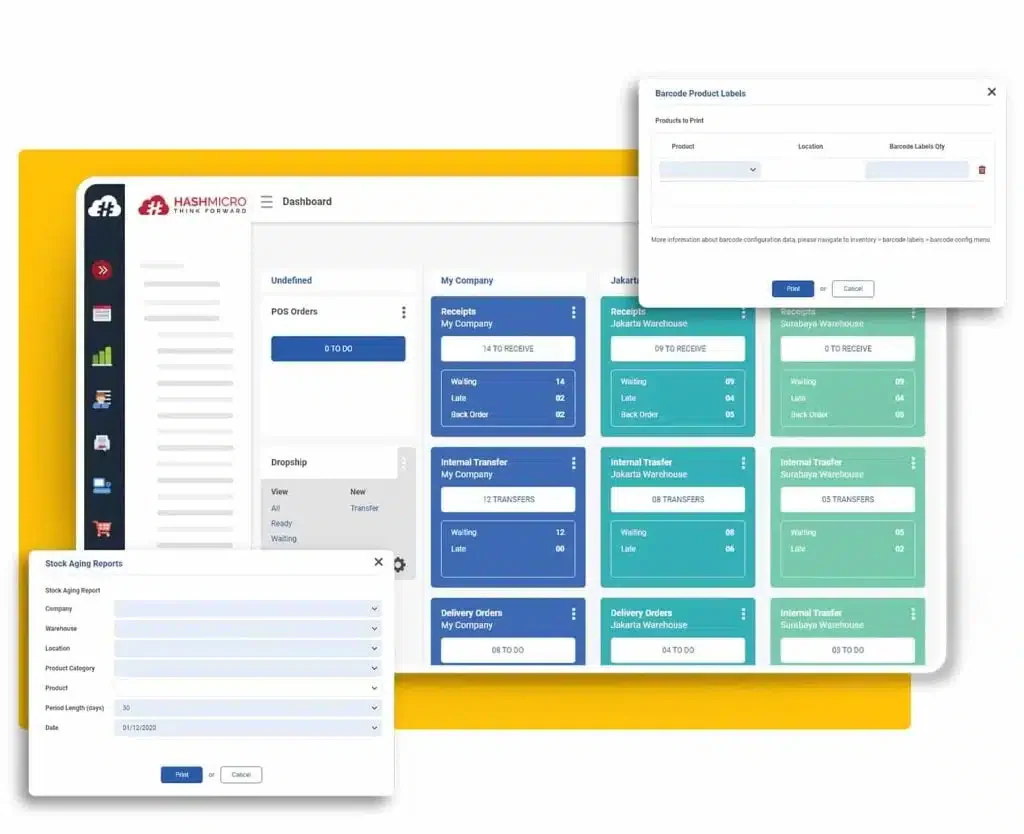
HashMicro's Warehouse Management System is the top choice for businesses in the Philippines. This system can provide a significant boost for warehouse management, thanks to its advanced features and robust integration capabilities.
Why we recommend it: HashMicro helps optimize inventory and storage workflows while complying with Philippine warehouse regulations, such as those in the Customs Modernization and Tariff Act (Republic Act No. 10863).
Key Features
- RFID warehouse rack stock automation
- Barcode, lot, and serial number tracking
- Cycle time analysis
- Stock optimizer per warehouse
- 3D view of stock location
- Removal strategy management
- Pick, pack, and delivery 3-step route warehousing
- Comprehensive Reporting/Analytics
In addition to these features, HashMicro can connect with other modules and systems in the company, from accounting and finances to procurement management, to stock management.
| Pros | Cons |
|
|
Suitable for: HashMicro’s Warehouse Management System in the Philippines offers a comprehensive ERP solution that covers end-to-end business operations, helping businesses enhance efficiency, manage multiple branches, and increase profitability.
Pricing: HashMicro offers customized pricing based on your business’s specific needs and size. Click the banner below to discover the pricing scheme.

2. Brightpearl WMS
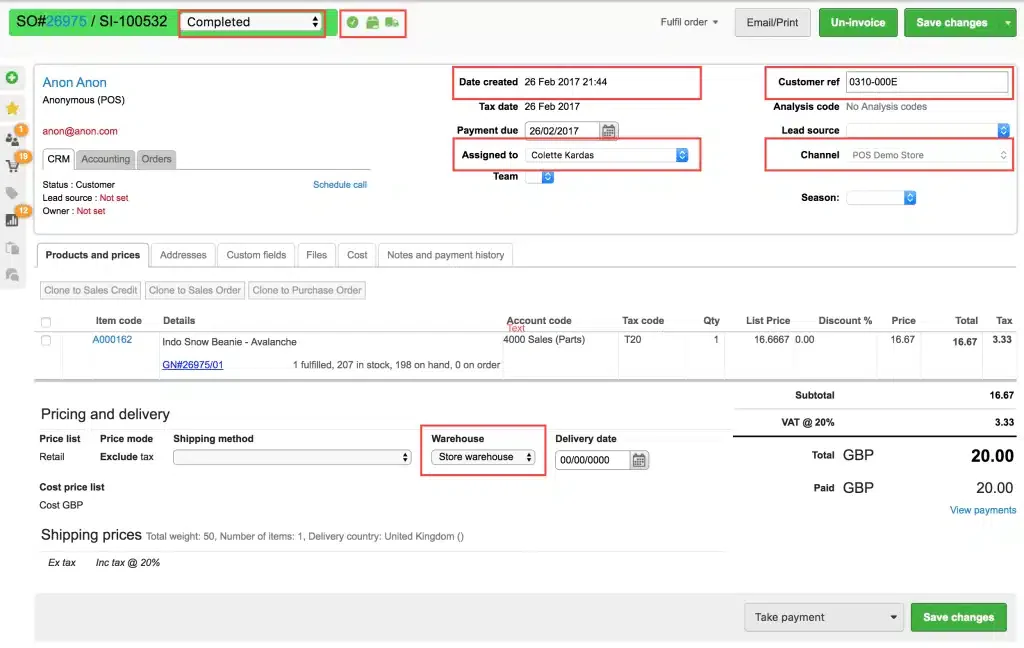
Brightpearl combines warehouse management with retail operations, inventory, order routing, shipping, forecasting, and accounting connections. Its barcode-supported pick, pack, and ship workflows fit growing omnichannel brands that want one operational platform. Pricing is tailored to each business, with unlimited users included at no additional cost.
Key Features
- Order processing
- Receiving & put-away
- Picking and packing
- Warehouse management
- Reporting/Analytics
| Pros | Cons |
|
|
Deployment: Cloud-based
Suitable for: Retailers and omnichannel merchants with high order volumes.
Pricing: offers a subscription-based pricing model, with costs varying based on factors such as the number of users, sales channels, and monthly order volume.
3. Infor WMS
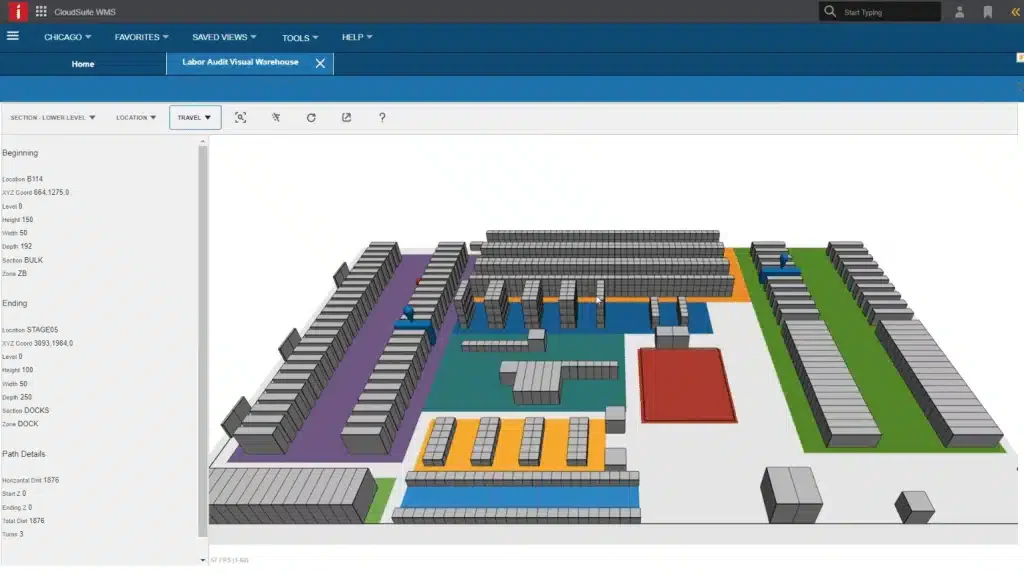
Infor WMS supports advanced receiving, directed putaway, cross-docking, labor, wave planning, billing, and multi-owner operations. It is appropriate for enterprises and logistics providers managing complex facilities or customer-specific rules. The official logistics page supports cloud or on-premises deployment, while pricing is supplied through a sales consultation.
Key Features
- Label printing
- Inspection management
- Labor management
- Backorder management
- Barcode
| Pros | Cons |
|
|
Deployment: Cloud or on-premises.
Suitable for: Complex enterprise, 3PL, and multi-owner warehouse networks
Pricing: Custom quote; no public PHP list price is shown on the official product page.
4. Microsoft Dynamics 365 WMS
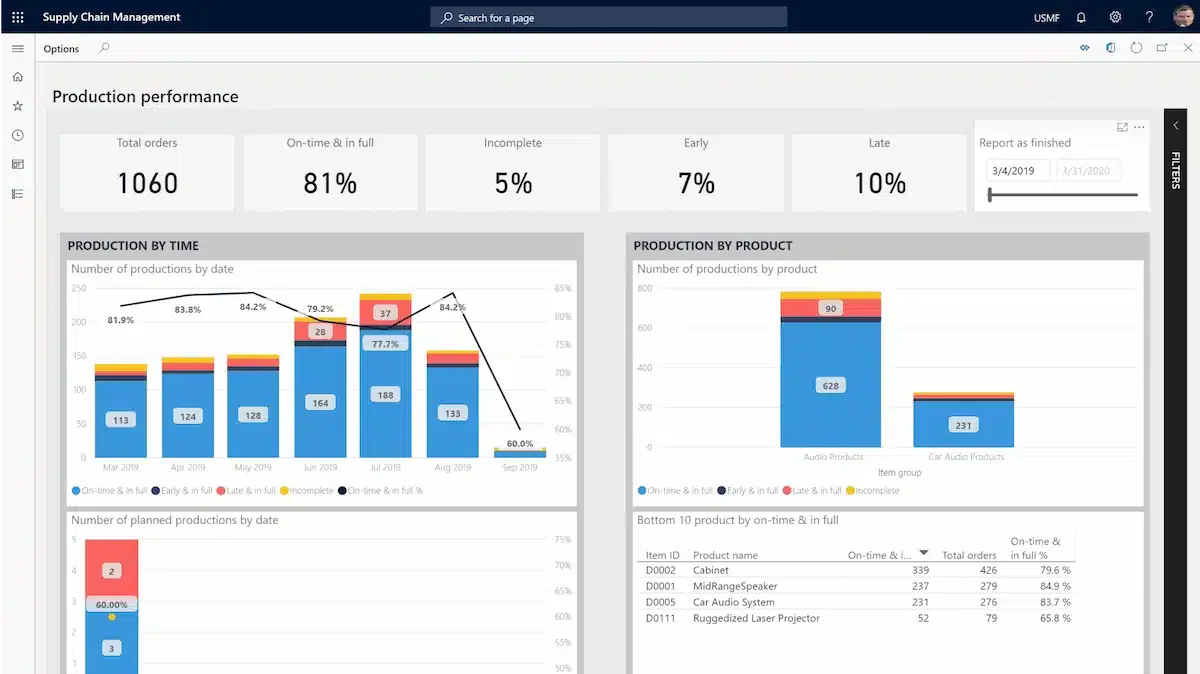
Dynamics 365 Supply Chain Management combines warehouse execution with inventory, procurement, manufacturing, order management, asset management, and analytics. It fits enterprises that want WMS capabilities within the Microsoft ecosystem and need configurable mobile warehouse processes. Licensing is per user, with a higher-priced Premium tier for advanced demand-planning capabilities.
Key Features
- Full batch and serial item support
- Multiple picking strategies
- Nex-gen barcode scanner
- Pallet/container types for warehouse processes
- Label printing and label routing with Zebra ZPL support
- Business intelligence integration into Power BI
| Pros | Cons |
|
|
Deployment: Microsoft cloud subscription.
Suitable for: Enterprises already using Microsoft business applications
Pricing: Standard: US$210/user/month billed yearly (≈ ₱12,955). Premium: US$300/user/month billed yearly (≈ ₱18,508). Taxes and implementation are excluded.
5. Zoho WMS
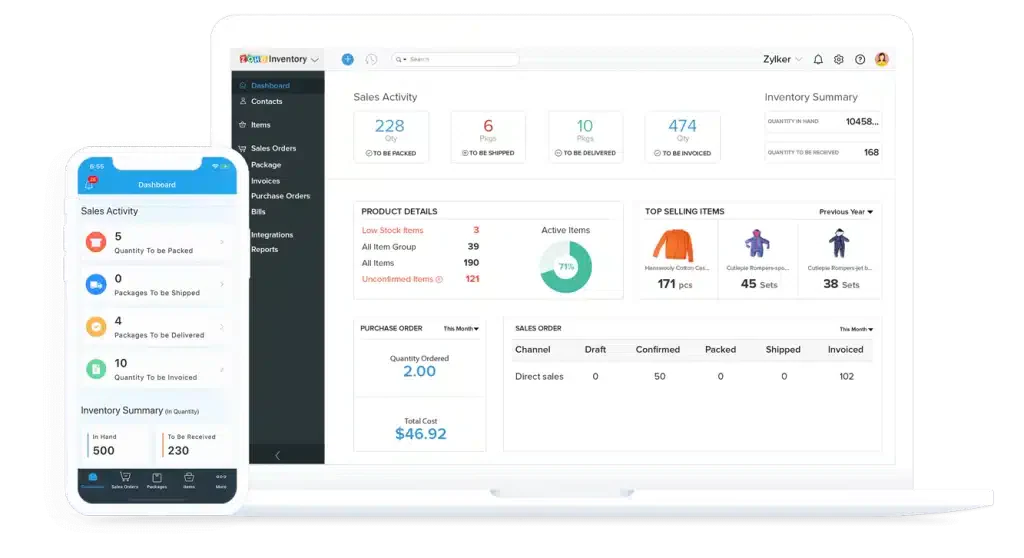
Zoho Inventory provides cloud inventory, order management, barcode scanning, serial and batch tracking, warehouse controls, and ecommerce integrations. It is a practical option for smaller organizations that value transparent pricing and a broad business-app ecosystem. Advanced warehousing is sold as a separate add-on billed annually per organization.
Key Features
- Purchase order software
- Invoicing
- Warehouse management
- Order fulfillment
- Barcoding
| Pros | Cons |
|
|
Deployment: Cloud-based.
Suitable for: Small and growing businesses needing affordable cloud inventory and warehouse tools
Pricing: Free plan available. Yearly billing: Standard US$29 (≈ ₱1,789), Professional US$79 (≈ ₱4,874), Premium US$129 (≈ ₱7,958), Enterprise US$249 (≈ ₱15,361) per organization/month. Advanced Warehousing add-on: US$124.17 (≈ ₱7,660) per organization/month.
6. Focus Softnet WMS
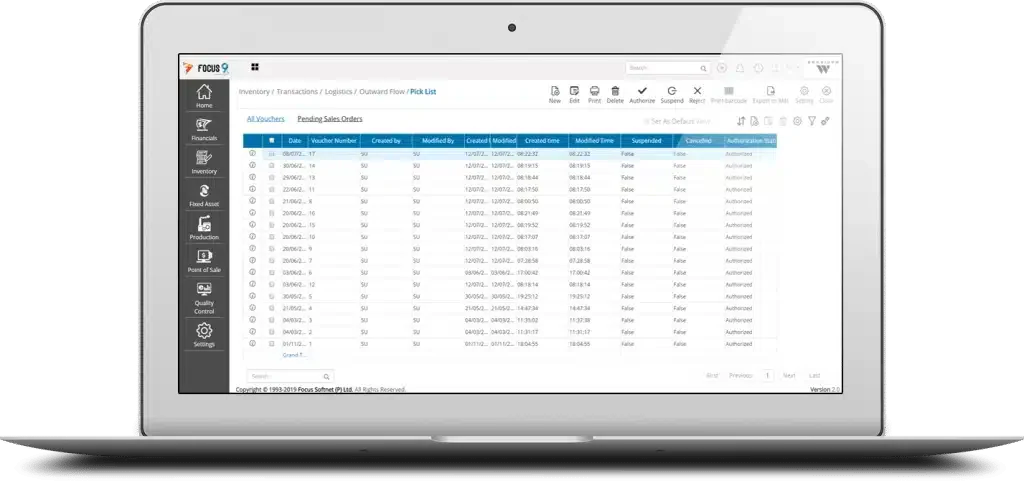
Focus WMS covers receiving, storage, replenishment, picking, packing, dispatch, and warehouse visibility within the Focus Softnet business-software ecosystem. It may suit organizations that want configurable processes and integration with finance or ERP functions. The vendor does not publish a standard price, so buyers must request a scoped proposal.
Key Features
- Warehouse management
- Order processing
- Labor management
- Receiving & put-away
- Picking & packing management
| Pros | Cons |
|
|
Deployment: Cloud or project-specific deployment confirmed with the vendor.
Suitable for: Mid-market and enterprise organizations needing configurable warehouse control
Pricing: Custom quote as no public PHP list price is published.
7. Oracle WMS
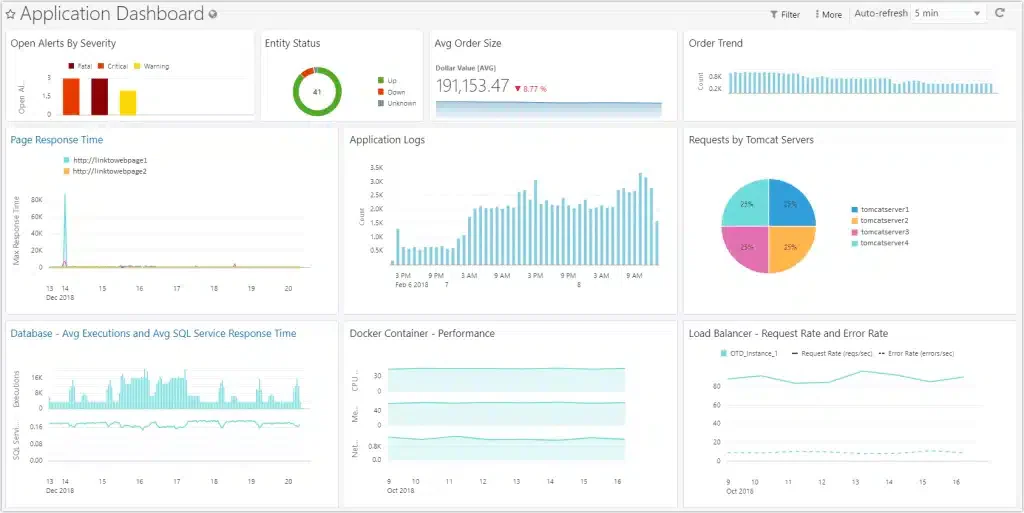
Oracle Warehouse Management is a cloud service for receiving, inventory, fulfillment, labor, yard, and automation-connected warehouse operations. It is designed for enterprises that need scalable execution across complex distribution networks and integration with Oracle supply-chain applications. Oracle provides demonstrations and sales consultation instead of publishing a standard subscription price.
Key Features
- Procurement management
- Materials management
- Order processing
- Purchasing
- Maintenance management
| Pros | Cons |
|
|
Deployment: Oracle cloud service.
Suitable for: Large enterprises running global, high-volume logistics networks
Pricing: Custom quote as the official page directs buyers to request a logistics demo and does not show a public PHP price.
8. Logiwa WMS
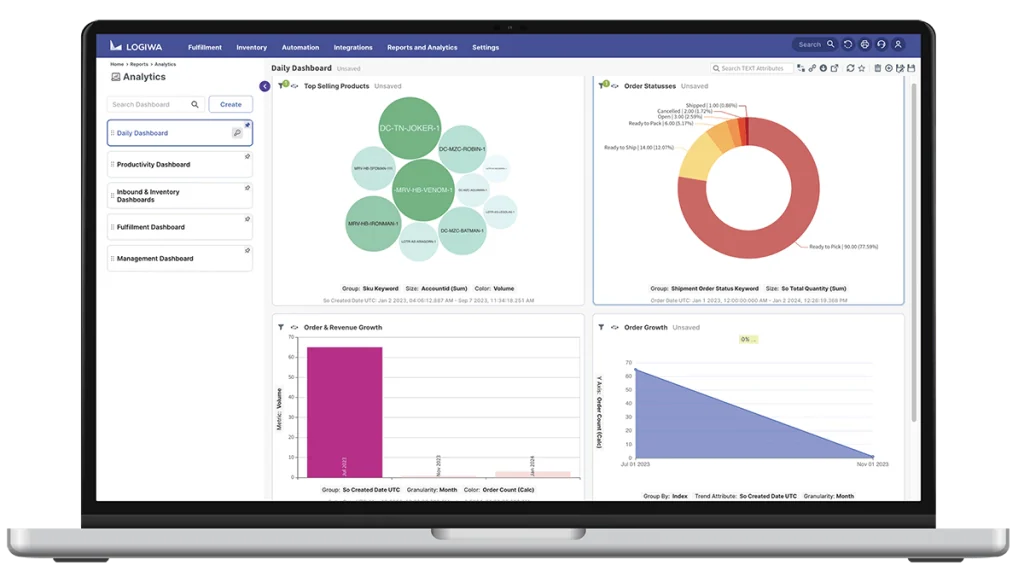
Logiwa IO is a cloud-native WMS built for high-volume fulfillment, ecommerce brands, and third-party logistics providers. It emphasizes automation, order routing, warehouse execution, customer access, and integrations without per-seat charges. Pricing scales with each operation’s fulfillment requirements, while unlimited users and core functionality are included in the commercial model.
Key Features
- Warehouse management
- Reorder management
- 3PL management
- Order fulfillment
- Barcode / RFID
| Pros | Cons |
|
|
Deployment: Cloud-native SaaS.
Suitable for: High-volume ecommerce fulfillment and 3PL operations
Pricing: Custom quote based on fulfillment needs, unlimited users and core functionality are included.
9. Epicor Kinetic WMS
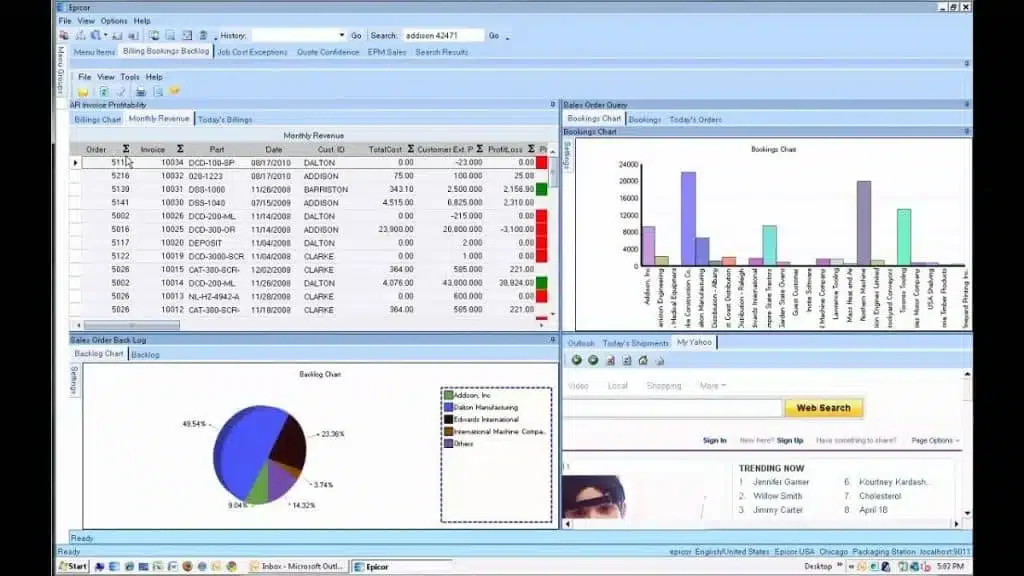
Epicor Kinetic offers warehouse and supply-chain functions alongside manufacturing, inventory, purchasing, and order management. It is most relevant to manufacturers and distributors that want warehouse execution connected to production and ERP data. Epicor provides product demonstrations and scoped commercial proposals rather than a public WMS subscription price.
Key Features
- Barcode / RFID
- Order management
- Picking & packing
- Receiving & putaway
- Workforce management
| Pros | Cons |
|
|
Deployment: Cloud, hybrid, or deployment model confirmed for the selected Epicor edition.
Suitable for: Manufacturers
and distributors already using Epicor Kinetic.
Pricing: Custom quote as no public PHP WMS list price is published on the official product page.
10. PALMS WMS
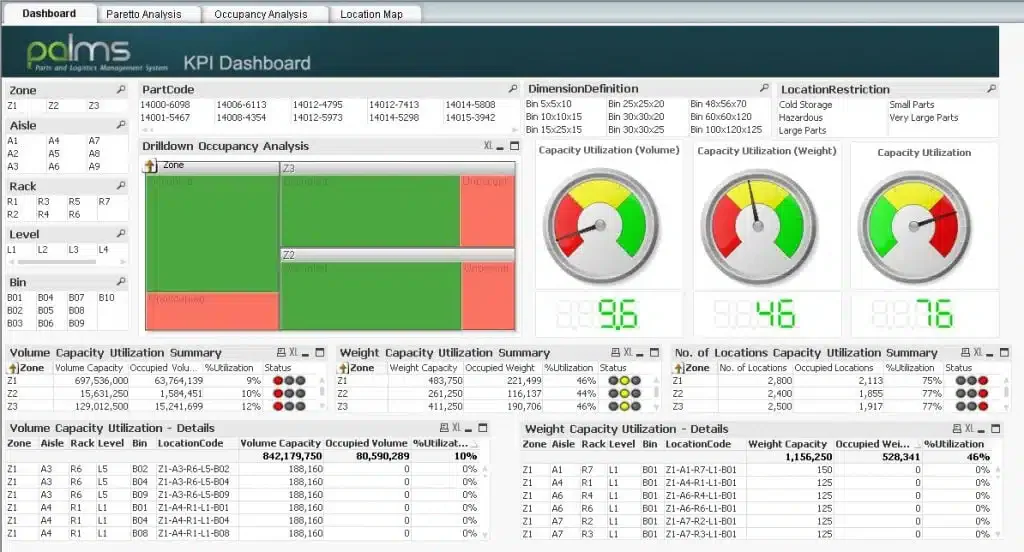
PALMS WMS by Technoforte supports inbound, putaway, inventory, picking, packing, dispatch, billing, and operational reporting. It targets distribution, manufacturing, retail, and third-party logistics environments that need configurable warehouse processes. Pricing and final deployment terms are not displayed publicly and must be confirmed through a vendor proposal.
Key Features
- 3PL Management
- Warehouse Management
- Cross Docking
- Picking & Routing
- Order Fulfillment
| Pros | Cons |
|
|
Deployment: Cloud or on-premises subject to the selected implementation.
Suitable for: Distribution, manufacturing, and 3PL warehouses needing configurable execution
Pricing: Custom quote as no public PHP list price is shown.
11. WASP Barcode Technologies WMS
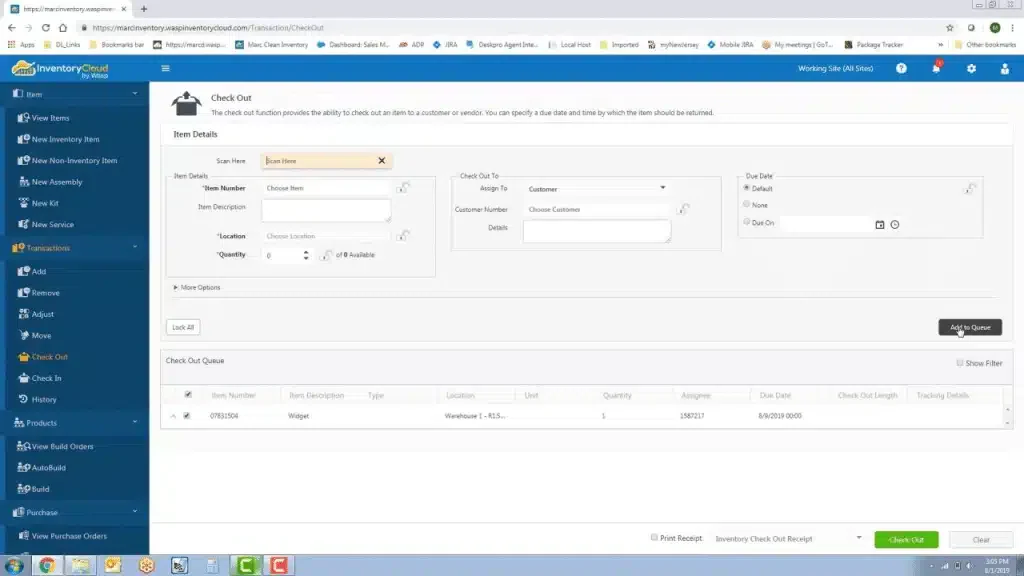
Wasp InventoryCloud focuses on barcode-based inventory tracking, stock counts, locations, alerts, and reporting. It can suit smaller organizations moving beyond spreadsheets, although it should be evaluated as inventory-control software rather than a full tier-one WMS. Current commercial terms require a quote; discontinued bundle prices should not be presented as active pricing.
Key Features
- Supplier management
- Reporting / Analytics
- Warehouse management
- Retail stock management
- Reorder management
| Pros | Cons |
|
|
Deployment: Cloud-based InventoryCloud service.
Suitable for: Small and mid-sized organizations prioritizing barcode-based inventory control
Pricing: Custom quote. Do not reuse discontinued bundle MSRP values as current pricing.
12. Aptean WMS
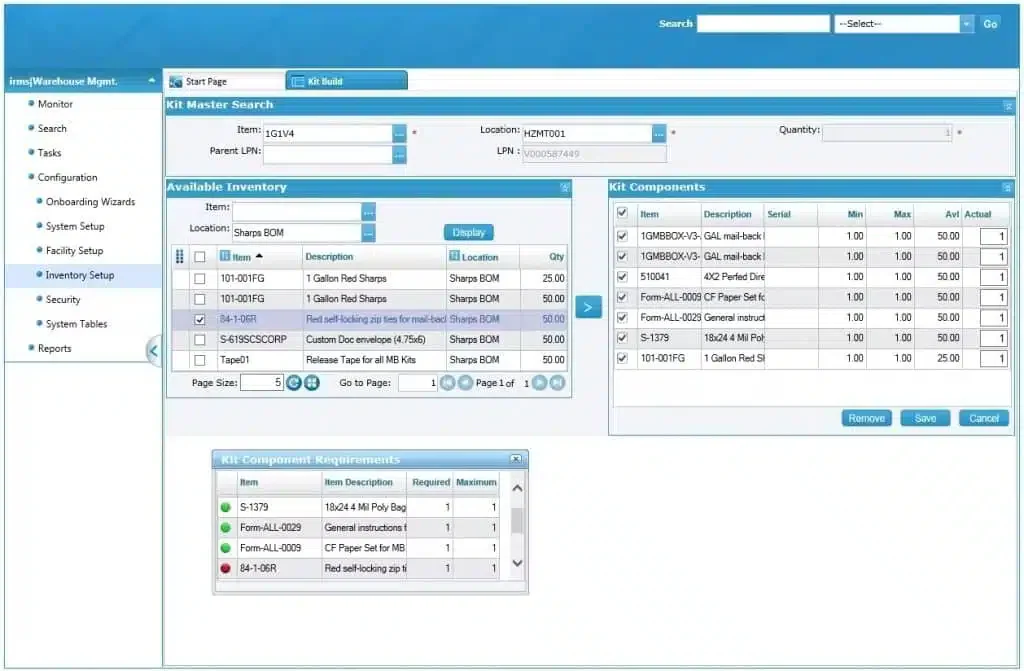
Aptean offers industry-specific WMS products for receiving, inventory, picking, shipping, traceability, labor, and automation-enabled operations. It is relevant to organizations that need warehouse workflows adapted to sector requirements, especially regulated or high-throughput environments. Aptean does not publish a universal price because product edition and implementation scope vary.
Key Features
- Work order management
- Barcode / RFID
- Purchasing
- Invoicing
- Financial management
| Pros | Cons |
|
|
Deployment: Cloud or product-specific deployment confirmed during scoping.
Suitable for: Food, beverage, consumer goods, and other industry-specific warehouse operations
Pricing: Custom quote; no universal public PHP price is published.
13. Fishbowl WMS
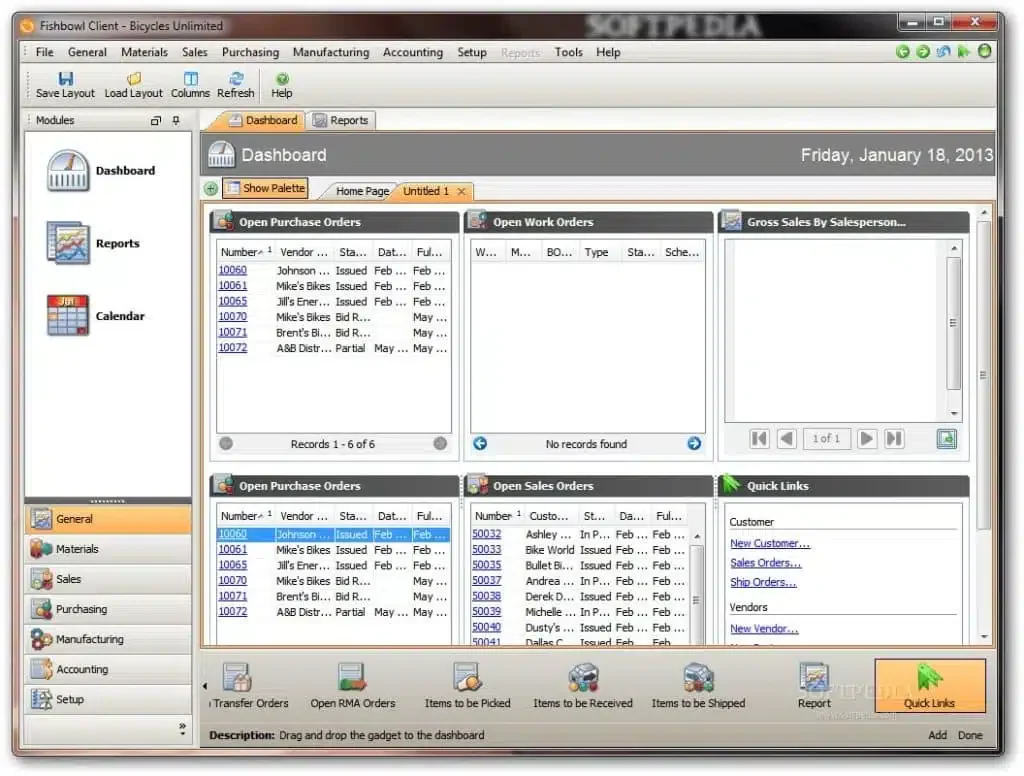
Fishbowl provides barcode inventory, purchasing, order management, manufacturing, warehouse, and accounting integrations. Fishbowl Inventory serves businesses moving and selling finished goods, while Fishbowl Advanced targets manufacturing, multi-warehouse, 3PL, and EDI requirements. Public monthly pricing is available, but Advanced pricing varies by users and deployment.
Key Features
- Purchasing
- Location control
- Reorder management
- Order entry
- Warehouse management
| Pros | Cons |
|
|
Deployment: Cloud-based Inventory; Fishbowl Advanced deployment varies by selected package.
Suitable for: Small and mid-sized distributors, manufacturers, and multi-warehouse operators
Pricing: Fishbowl Inventory starts at US$229/month (≈ ₱14,127) billed annually. Growth: US$429 (≈ ₱26,466); Scale: US$729 (≈ ₱44,973). Advanced Warehouse starts at US$595/month (≈ ₱36,707), priced by users and deployment.
14. Acumatica WMS
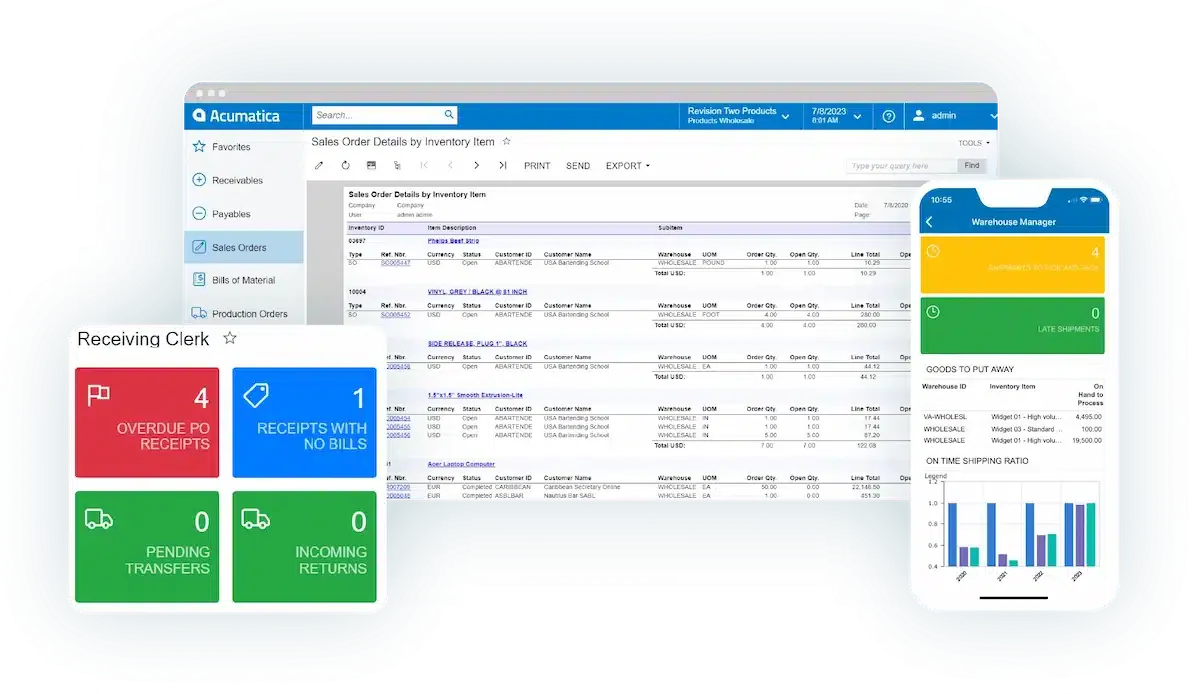
Acumatica embeds warehouse management in a cloud ERP platform covering distribution, manufacturing, commerce, finance, and inventory. It suits growing businesses that want mobile scanning and warehouse execution connected to a wider operational system. Pricing is not per user, but it is tailored by applications, expected usage, resource requirements, and deployment preference.
Key Features
- Order fulfillment
- Automatic tracking
- Stock movement
- Barcodes and labels
- Warehouse management
| Pros | Cons |
|
|
Deployment: Public cloud, private cloud, or on-premises options depending on the subscription and partner scope.
Suitable for: Growing
distributors, retailers, and manufacturers needing ERP-connected warehousing
Pricing: Custom quote with unlimited users; price depends on applications, expected usage/resources, and deployment preference.
15. Cin7 WMS
Cin7 Core combines inventory, purchasing, sales orders, warehouse processes, production functions, and ecommerce integrations in a cloud platform. It fits growing product businesses that want transparent plan tiers and multiple sales-channel connections. Advanced warehouse management appears in the US$999 Advanced plan, while Omni pricing is provided by quotation.
Key Features
- Multi-warehouse management
- Real-time inventory tracking
- Automated order processing
- Integration with e-commerce platforms
| Pros | Cons |
| User-friendly interface | Learning curve for advanced features |
| Excellent integration options | Limited customization in reports |
| Reliable customer support | Occasional sync delays |
| Detailed inventory analytics | Higher cost for advanced modules |
Deployment: Cloud-based
Suitable for: Product sellers
and omnichannel businesses needing inventory, orders, and warehouse control
Pricing: Standard: US$349/month (≈ ₱21,531); Pro: US$599/month (≈ ₱36,954); Advanced with advanced WMS: US$999/month (≈ ₱61,630). Prices exclude taxes; Omni is custom quoted.
16. ShipHero WMS
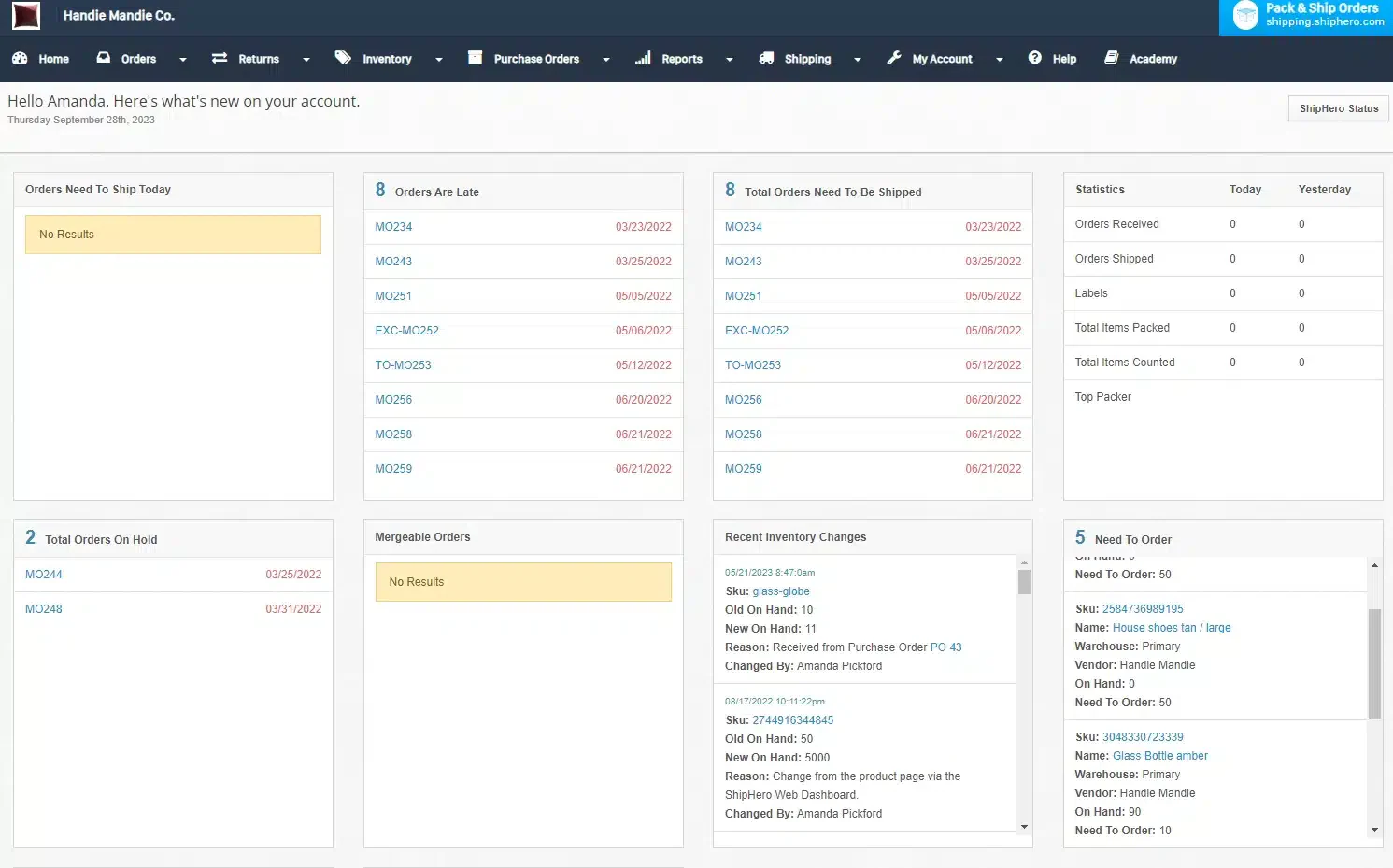
ShipHero WMS is built for ecommerce warehouse operations, with order batching, automation rules, returns, rate shopping, lot and expiration tracking, routing, and 3PL customer tools. It suits established brands and logistics providers with significant fulfillment volume. Public starting prices include setup, training, and round-the-clock support for standard plans.
Key Features
- Automated shipping and order management
- Real-time inventory sync
- Batch picking and packing
- Returns management system
| Pros | Cons |
| Highly intuitive UI | Limited offline capabilities |
| Seamless integration with major platforms | Limited advanced reporting options |
| Responsive customer support | Complex setup for multi-location warehouses |
| Strong automation capabilities | No on-premise version available |
Deployment: Cloud-based.
Suitable for: Ecommerce brands and 3PLs running high-volume fulfillment
Pricing: Standard WMS for Brands starts at US$1,995/month (≈ ₱123,076). WMS for 3PLs starts at US$2,145/month (≈ ₱132,329). Enterprise WMS is custom quoted.
17. Blue Yonder WMS
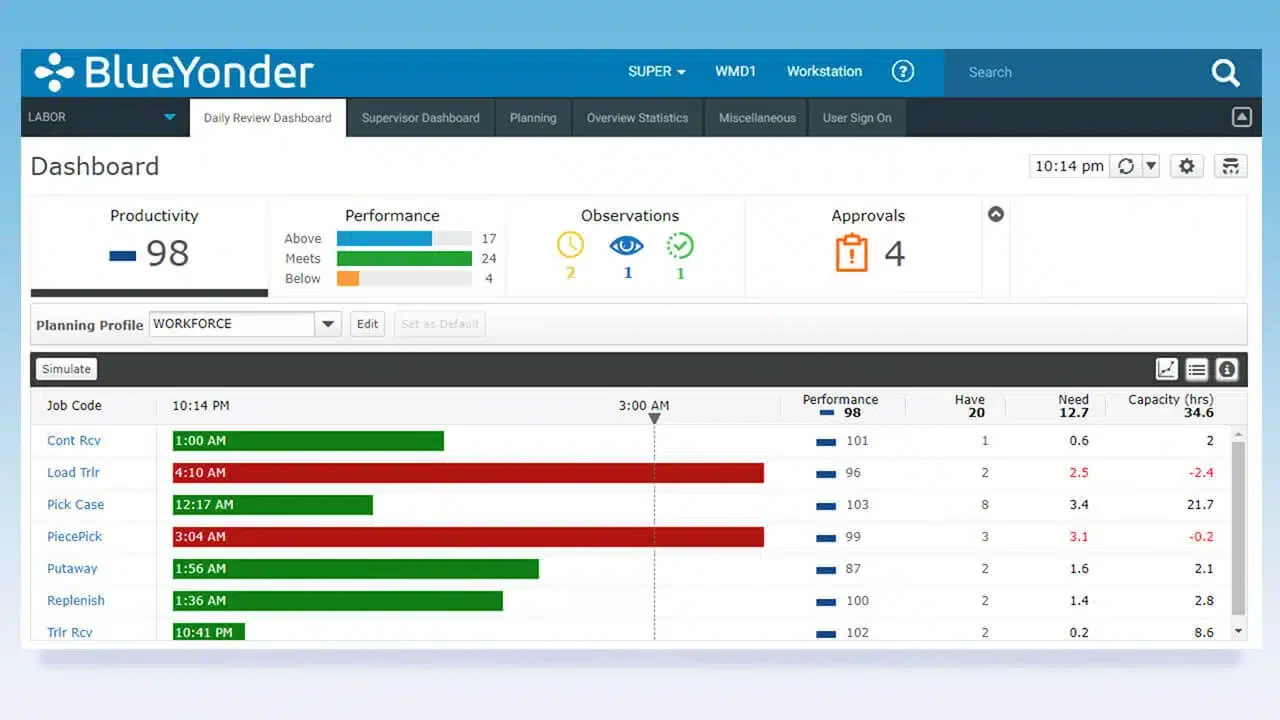
Blue Yonder WMS provides cloud-native warehouse execution, labor, robotics, automation, inventory, and intraday orchestration for complex distribution operations. It is designed for enterprises that need scale, resilience, and continuous optimization across automated facilities. The vendor does not publish a standard price, so commercial terms require a scoped sales engagement.
Key Features
- AI-driven demand forecasting
- Flexible workflow management
- Real-time labor and task management
- Advanced analytics and reporting tools
| Pros | Cons |
| Extensive customization options | Steep learning curve for new users |
| Strong integration with ERP systems | Requires dedicated IT support for setup |
| Robust analytics and forecasting | High resource consumption |
| Scalable for large operations | Lengthy implementation time |
Deployment: Cloud-native.
Suitable for: Large, automated, high-complexity distribution networks
Pricing: Custom quote; no public PHP list price is published.
18. Manhattan Associates WMS
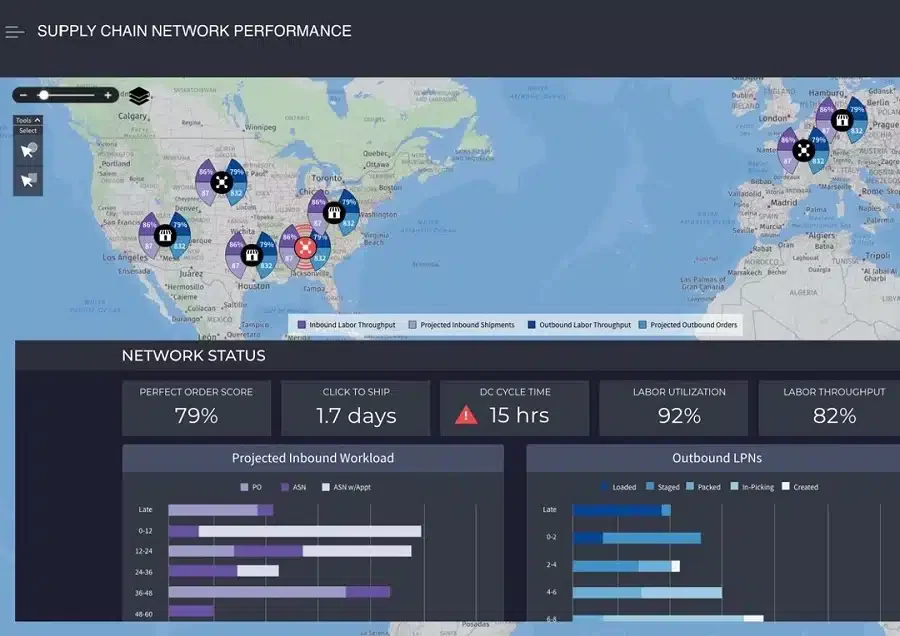
Manhattan Active Warehouse Management is a cloud-native, microservices-based WMS that unifies warehouse execution, labor, automation, robotics, transportation connections, and real-time operational data. It is intended for large, complex networks requiring continuous updates and extensibility. Pricing is not published and must be scoped directly with Manhattan Associates.
Key Features
- Advanced WMS systems labor
- AI-driven order fulfillment
- Cross-docking capabilities
- Multi-channel distribution support
| Pros | Cons |
| Highly customizable workflows | Complex interface for beginners |
| Extensive third-party integrations | Lengthy training required |
| Scalable to accommodate growth | Expensive support packages |
| Detailed tracking and analytics | High initial investment |
Deployment: Cloud-native Manhattan Active platform.
Suitable for: Global retailers, distributors, and 3PLs with complex fulfillment networks
Pricing: Custom quote; the official page directs buyers to speak with an expert.
Key Features to Look For When Choosing a WMS

With so many warehouse management software options available, choosing the right one is crucial. Selecting the right system unlocks the full benefits of WMS, while the wrong choice leads to inefficiencies, delays, and reduced productivity.
A good warehouse management system should have these features to help you get the most out of your warehouse operations:
- Receiving & Put-Away: WMS streamlines the receiving and put-away process using business rules and warehouse flow optimization. It integrates with RFID and barcode technology to reconcile incoming items against digital purchase orders.
- Inventory Management: Provides real-time inventory visibility across warehouses, in transit, and in-stores. It uses barcodes and RFID for tracking, supports cycle counting, and offers insights to forecast demand and optimize stock levels.
- Order Picking, Packing & Fulfillment: WMS optimizes storage, retrieval, and packing through RF scanning, robotics, and algorithms. It supports picking techniques like batch, zone, and cross-docking.
- Shipping: Integrates with logistics tools to automate bills of lading, packing lists, and shipment notifications. Real-time tracking ensures deliveries are accurate and timely.
- Labor Management: Tracks worker productivity and costs in real time. Supports task interleaving to reduce travel and dead time, helping plan and schedule efficiently.
- Yard & Dock Management: Guides truck drivers to the correct docks and supports cross-docking for faster order fulfillment, especially for perishable goods.
- Warehouse Metrics & Analytics: Automatically collects data for accurate reporting on shipping times, inventory accuracy, and operational costs. Visual analytics provides actionable insights for performance improvement.
- Lot or batch number tracking: For Philippine companies operating in the pharmaceuticals and food distribution sectors, warehouse management requires thorough recording and management of lot/batch numbers and expiration dates.
Conclusion
Warehouse management is not a standalone process, as it is closely connected with procurement, inventory control, and financial operations. Therefore, an effective WMS should integrate seamlessly with these modules to ensure a smooth supply chain.
With many warehouse management solutions available in the Philippines, choosing the right system depends on your operational complexity and business needs. A well-integrated and flexible WMS can help streamline workflows and improve data accuracy.
To determine the most suitable system for your operations, you may consider starting with a free consultation. This allows businesses to assess their requirements and explore solutions that best align with their warehouse management goals.
FAQ About Warehouse Management Systems
A software solution that helps manage and optimize all daily operations within a warehouse, from receiving goods to picking, packing, and shipping them out.
A WMS manages detailed warehouse execution, including bin locations, picking routes, barcode scans, replenishment, packing, and dispatch. An ERP manages broader business processes such as finance, procurement, sales, and manufacturing. The two systems can integrate, or warehouse functions may be included within an ERP suite.
Warehouse management software is tailored to enhance your warehouse operations, while ERP software is intended to automate processes throughout your entire business, including marketing and sales, human resources, customer service, procurement, inventory, and financial management.
The latest trends in warehouse management encompass robotics, inventory transportation, fleet management, and the Internet of Things (IoT).
Many warehouse management systems support barcode scanning, while RFID availability depends on the product, hardware, and implementation scope. These technologies can record inventory movements, validate picking and packing, and improve traceability. Buyers should confirm supported devices, label standards, integrations, and offline requirements during the vendor demonstration.
WMS implementation time depends on warehouse count, process complexity, integrations, data quality, hardware, customization, and user training. A simple cloud deployment can be faster than a multi-site enterprise rollout. Ask each vendor for a phased plan covering discovery, configuration, migration, testing, training, go-live, and post-launch support.